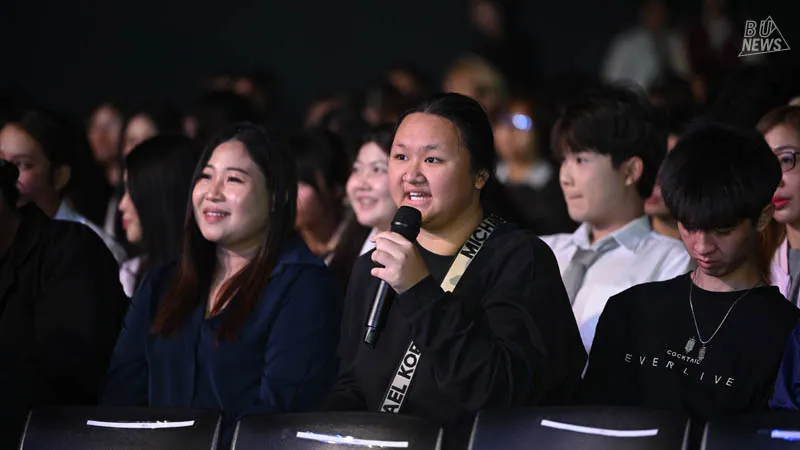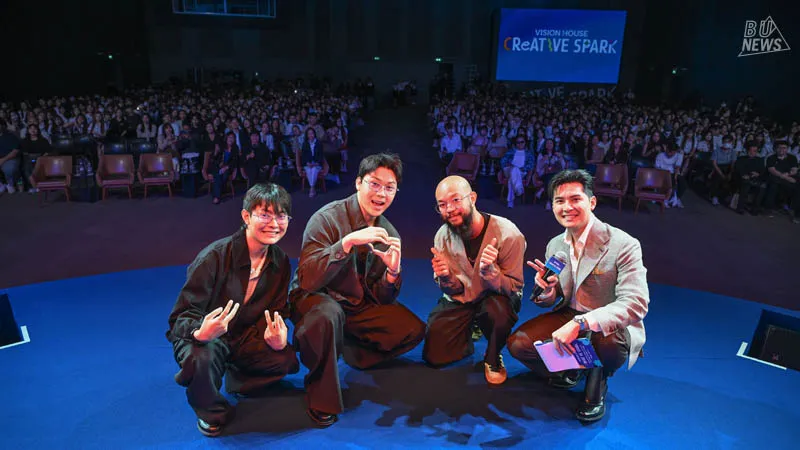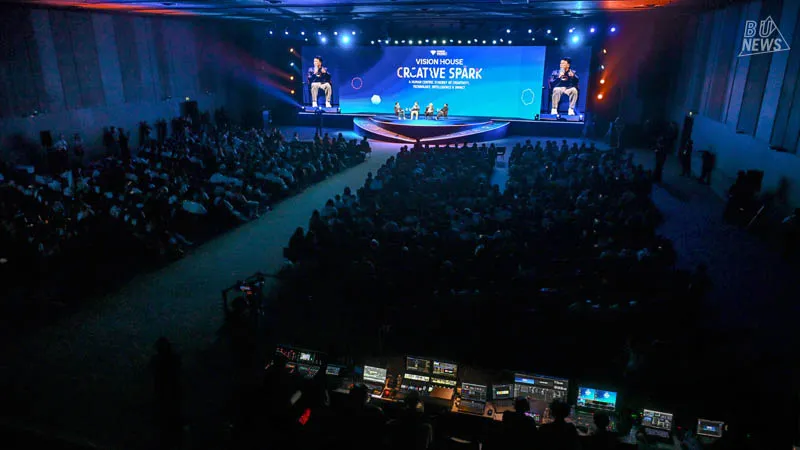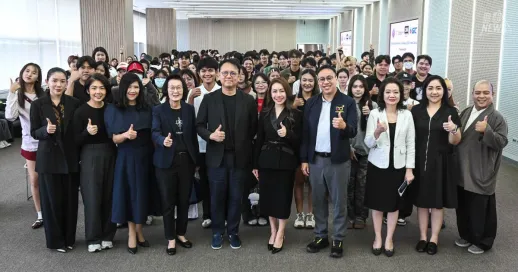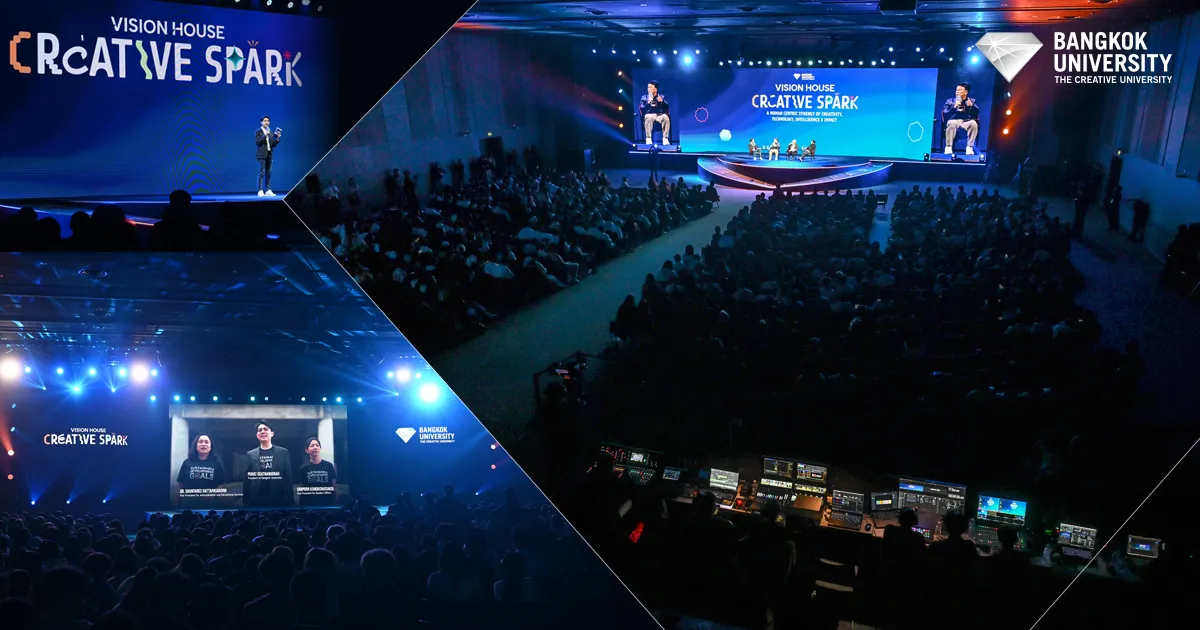
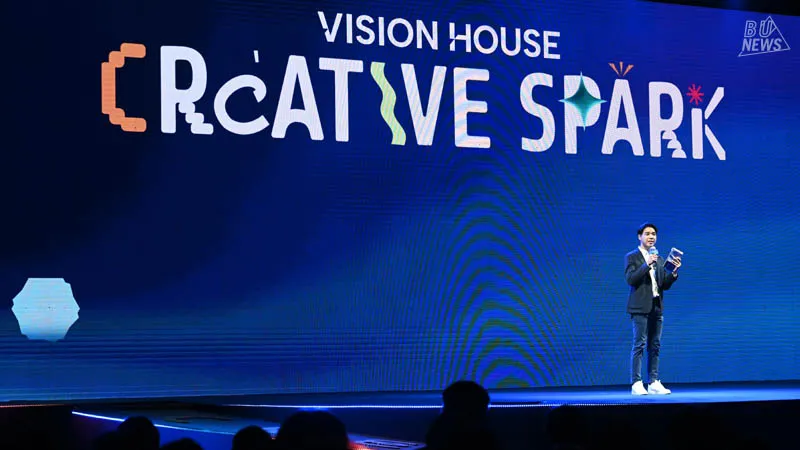
School of Communication Arts, Bangkok University, has announced the successful outcomes of VISION HOUSE: CREATIVE SPARK: A Human-Centric Synergy of Creativity, Technology, Intelligence & Impact — a platform bringing together professionals from media, content, technology, platforms, brands, the creator economy, and the wider creative industry to exchange perspectives, connect ideas, and build collaboration for the future of creative communication in the AI era at the Diamond Hall, Bangkok University. Organizers noted that as AI reshapes production structures, content distribution, audience understanding, and creative business models, the industry's key challenge is not simply using technology faster, but using it to understand people, build trust, develop future leaders, and drive a sustainable creative ecosystem.
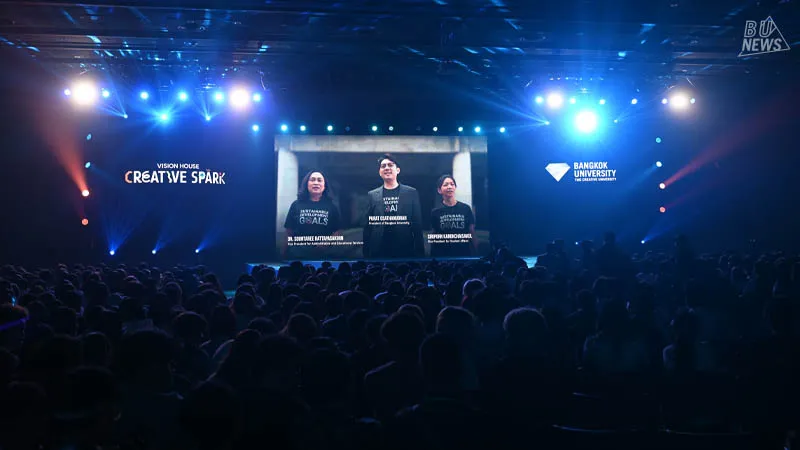
The event underscored the School of Communication Arts' role as a bridge between academic knowledge and real industry experience, opening a dialogue on Human-Centered Creative–AI Communication — creative communication that treats AI as an enabling force while keeping humans in charge of direction, meaning, ethics, and impact.
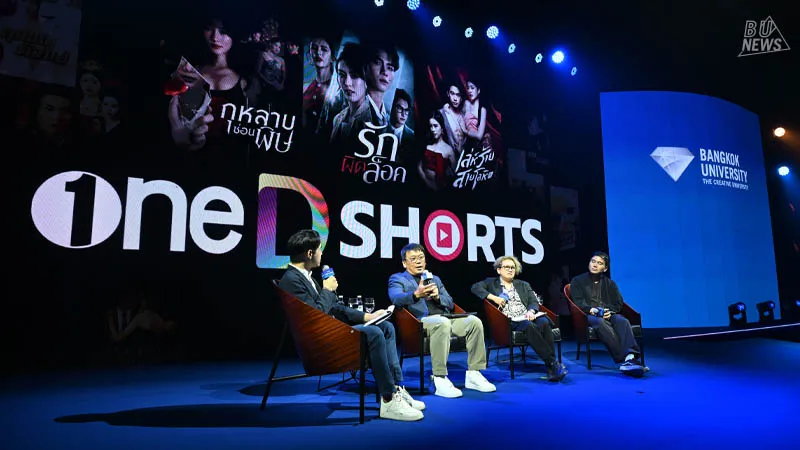
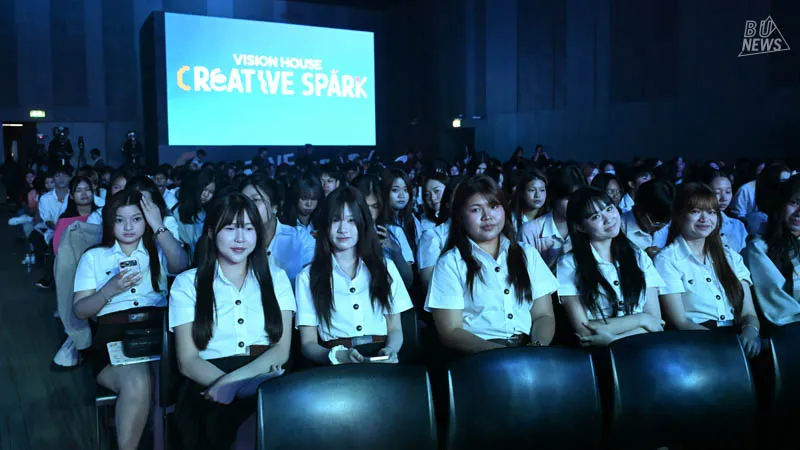
Session: "Micro Drama, Macro Impact"
The morning opened with a session framing micro dramas and vertical-format series not merely as short-form content or a passing trend, but as a signal of system-wide change — in storytelling methods, audience behavior, production models, content distribution, and business opportunities for Thai content. Panelists noted that vertical drama emerged not from technology alone, but from a clear shift in audience behavior, particularly mobile viewing in short bursts throughout the day — while commuting, waiting for the train, or filling idle moments on digital platforms — pushing producers to master faster, tighter storytelling that competes directly with Reels, TikTok, and short-form videos from a new generation of creators.
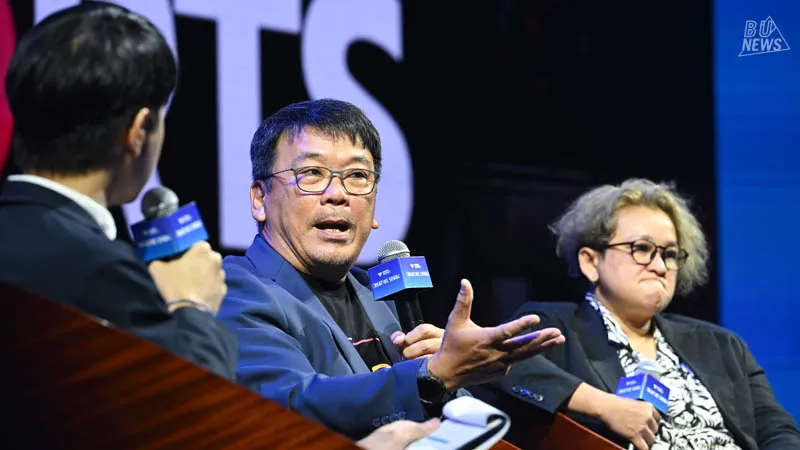
K.Sun Srikaewlor, Director at ONE 31, observed that vertical drama is a new arena requiring real adaptation — not simply shortening existing dramas, but understanding mobile viewing behavior and pacing stories to capture attention quickly. He noted that the core challenge is distilling a story into just seconds or minutes, using cliffhangers, unresolved threads, and audience psychology to sustain continuous viewing. He added that vertical drama allows more storytelling freedom than traditional formats, but demands a precise structure that gets audiences to the key moment as fast as possible. AI, he said, may support parts of the production workflow that require speed — such as sourcing references or preparing preview visuals — but the core still rests with humans, particularly the director's judgment in shaping emotion, pacing, and the story's underlying conviction.
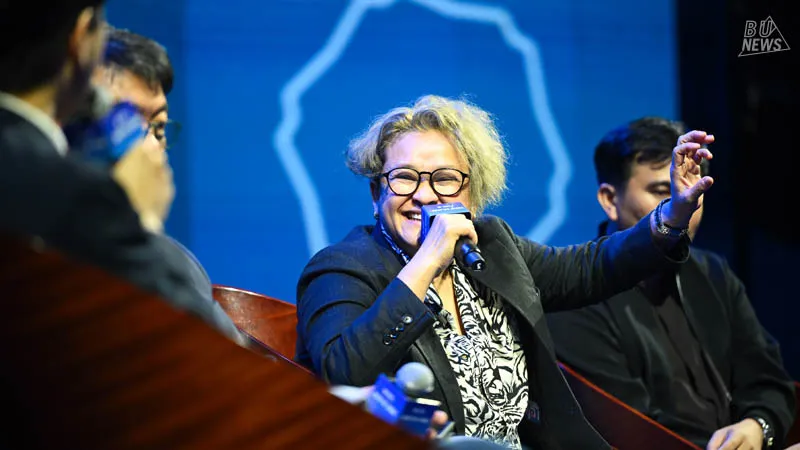
K.Napassarin Prompila, Executive Producer at Halo Productions, sees micro drama as a major opportunity for new entrants — students, directors, screenwriters, and creatives waiting for a chance to test ideas, build prototype work, and develop their own intellectual property. She noted micro drama is not just a new format but an entirely new content category requiring real learning, real experimentation, and a new workflow spanning writing, filming, editing, and keeping audiences engaged within a limited runtime. She added that while AI can speed up workflows — especially in an industry that must manage time and budget tightly — creators must still act as "good choosers" and "responsible curators," since creative work isn't just about producing faster, but about choosing what is right, appropriate, and meaningful to the audience.
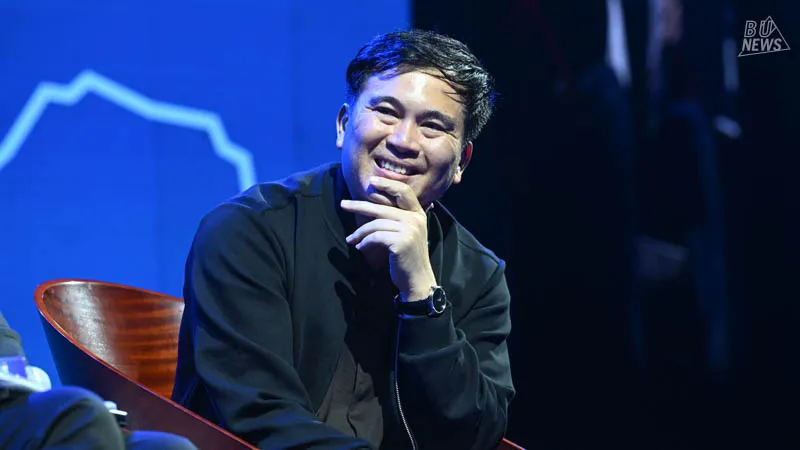
Dr. Jakkarin Thepvong, School member at BU's School of Digital Media and Cinematic Arts and co-writer/co-director of the series Thanaipisat, views compressing a story into short form as an artistic challenge for screenwriters, believing micro drama will gradually evolve toward deeper, more diverse content. He added that while AI can boost production efficiency, it cannot replace human understanding of culture, emotion, and lived experience — which remain at the heart of storytelling. He noted that even as storytelling formats change, the fundamentals of storytelling do not: audiences still need to root for characters and experience feeling, conflict, release, and meaning. The task for the next generation, he said, is not simply chasing new tools, but understanding the fundamentals of narrative, culture, and what they genuinely want to tell.
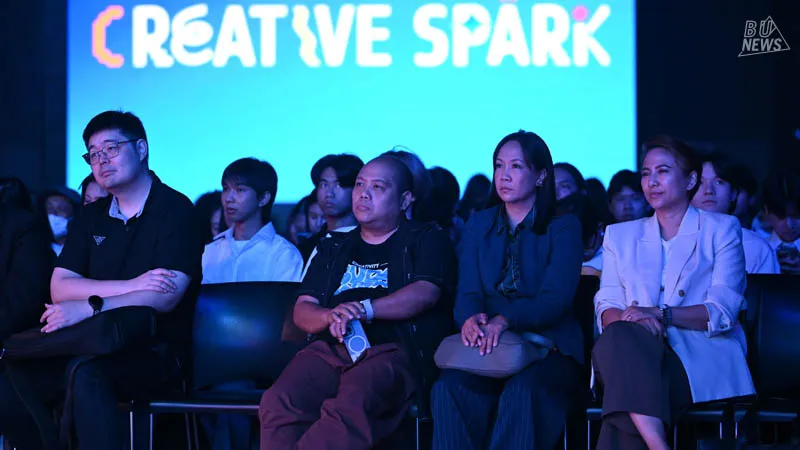
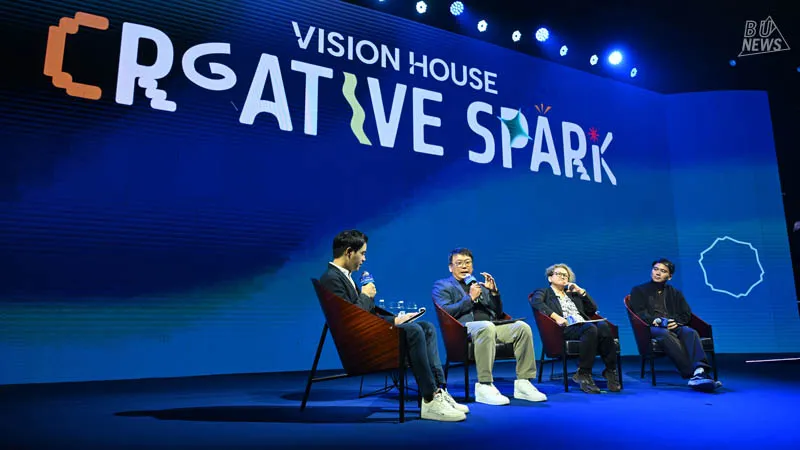
The session's key takeaway: micro drama represents both an opportunity and new pressure for the Thai content industry — opening doors for newcomers to experiment while pushing professional producers to rethink how they think, produce, and compete on fast-changing platforms. Success ultimately hinges not on brevity or speed alone, but on Human Truth — the quality that makes audiences not just click, but feel, connect, and want to stay with the story.

Session: "Authentic Content by Design: Building Trust and Social Accountability"
This session asked how creators, brands, and media organizations should design "authenticity" and "credibility" in an era when anyone can produce content faster and platforms can carry it further than ever. Panelists agreed authenticity does not mean revealing 100% of oneself, but consistently and responsibly communicating a clear, genuine facet of who one is.
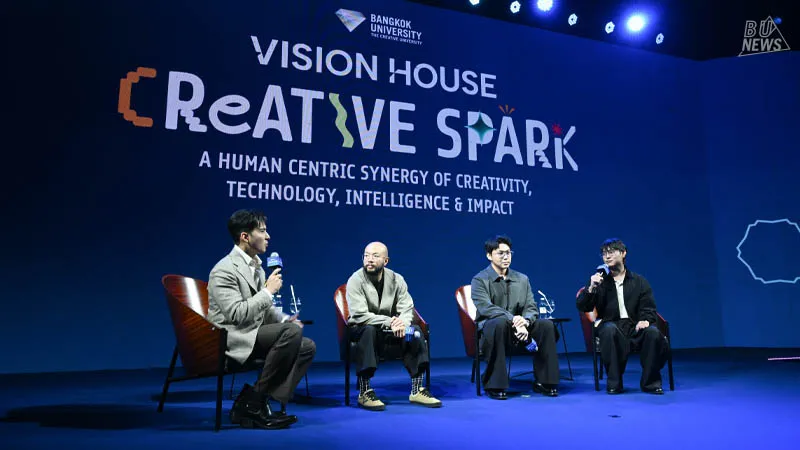
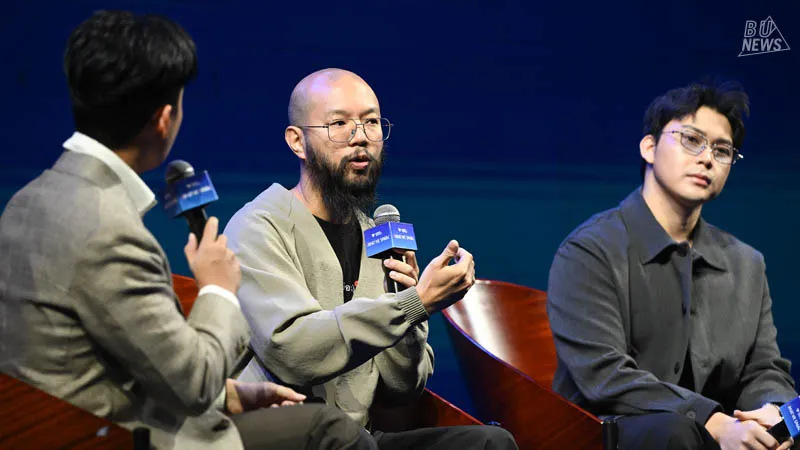
K.Isora Hata of Rubsarb Production noted that being authentic as a creator doesn't require telling every story or exposing every side of one's life — it requires understanding which facet of oneself, when communicated, is genuine, clear, and memorable to audiences, since a distinct character is a key foundation for long-term audience relationships.
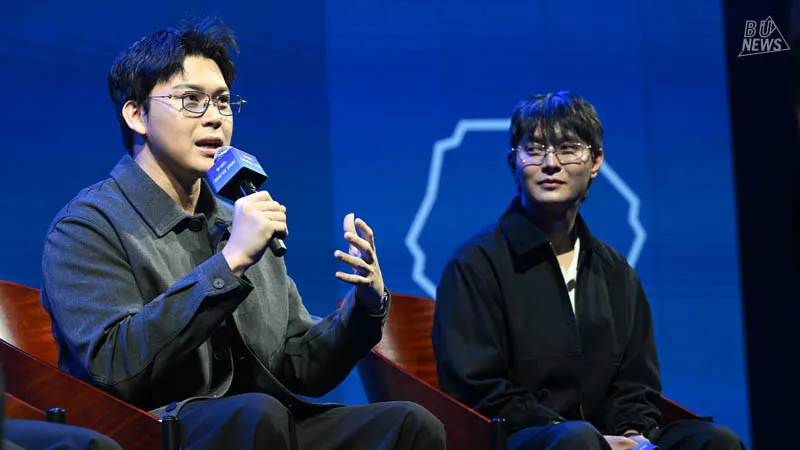
Dr.Makkaporn Kattiyathongkum ("Doctor Tang"), owner of the TANG MAKKAPORN channel, reflected that a single creator can take on multiple roles without needing to "act" as someone else — instead, they can draw on different facets of their authentic self to suit each platform and audience context, such as using YouTube as a space for more serious storytelling and TikTok as a space that's more fun and accessible. He also proposed a key principle for content creation: it must be both broad and deep — meaning content that connects with trends and reaches a wide audience, as well as content that may not go viral but delivers value and meaning to viewers on a deeper level.
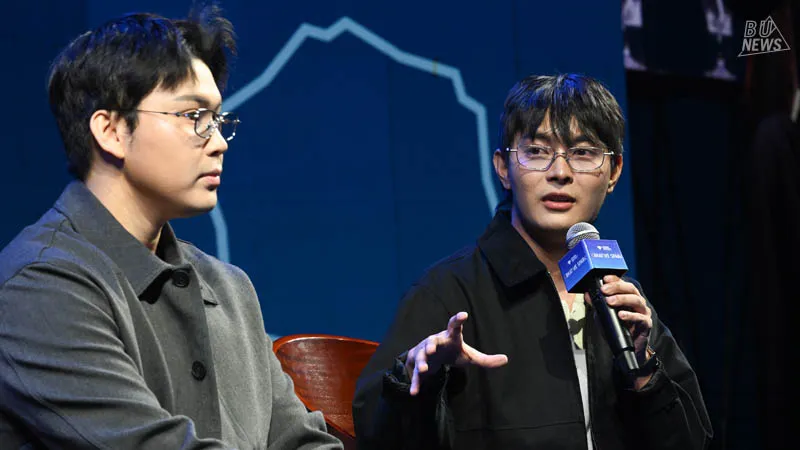
K.Wongsakorn Chuenil ("Tiger"), owner of the AMNOTLION channel, argued that for today's creators, Value matters more than Viral — consistency, frequency, and understanding platform rules are what build lasting fandom and community, rather than hoping a single clip goes momentarily viral.
The session concluded that in the AI and platform era, credibility isn't built by declaring "trust me" — it comes from a continuous series of small decisions: the identity a creator chooses to present, fact-checking, respect for people mentioned in content, prioritizing value over chasing trends, and building sustainable community over fleeting virality. A genuine Trust Economy emerges only when creators, brands, and media organizations design authenticity alongside accountability — good content in the AI era shouldn't just capture attention quickly, but make audiences feel the creator is genuine, purposeful, responsibly informed, and willing to learn from their impact.
Afternoon Theme: "Sparked Futures"
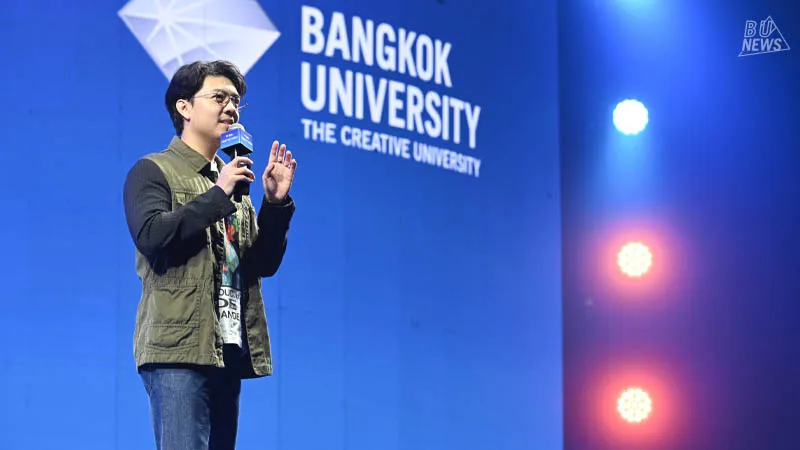
The afternoon opened with welcoming remarks from Ajarn.Purat Osathanugrah, President of Bangkok University, who emphasized that BU carries a DNA of creativity — a space for people bold enough to dream, think, and try new things. He said the heart of Creative Spark is inviting industry leaders and alumni to share experience and inspire the next generation to see that dreams can grow into real work, real business, and real social impact.
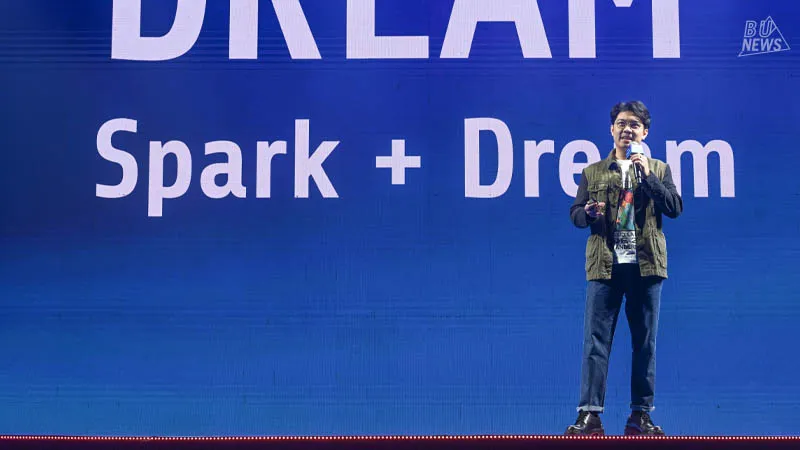
He highlighted Thailand's strengths in culture, creativity, soft power, and unique storytelling that can be rooted in Thai identity while connecting with global audiences — under the concept of "Uniquely Universal." He closed with the guiding idea: "Dream, Amplify, Deliver" — dare to dream, amplify that dream through tools and technology, and take action to make it real.
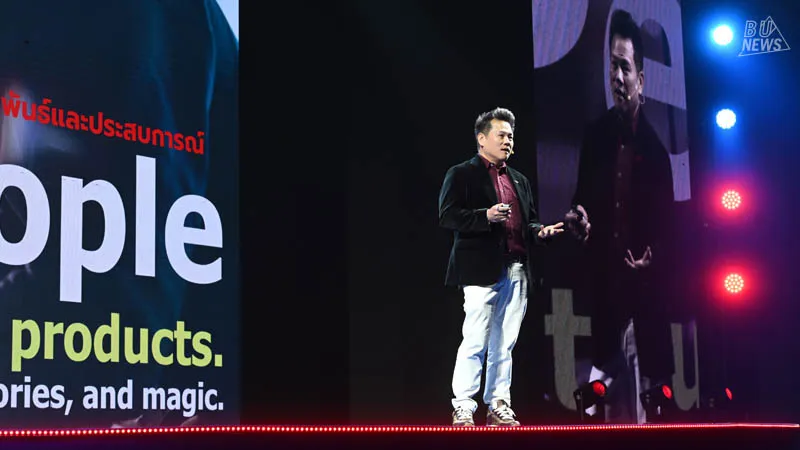
Keynote: "Empathy in Algorithms: Human Insight at the Heart of AI"
K.Oliver Kittipong Veerataecha, Chief Brand Officer of True Corporation PLC., noted that while AI and technology bring speed, precision, and efficiency, what the next generation of communicators must preserve is creativity, human understanding, and the ability to ask meaningful questions. AI should assist decision-making, not replace it — because AI learns from historical data that may carry hidden bias or limitations, so responsible use requires human judgment to verify, interpret, and consider impact on people and society. He stressed that AI still cannot fully grasp human emotion, hope, fear, dreams, culture, language, or humor — the difference between "data" and "meaning" remains a space where humans, especially communicators, play the most critical role in connecting technology, business, and people to create genuine social value.

Keynote: "Human-Centric Synergy Hub: From Memory, Music & Meaning to Creative Impact"
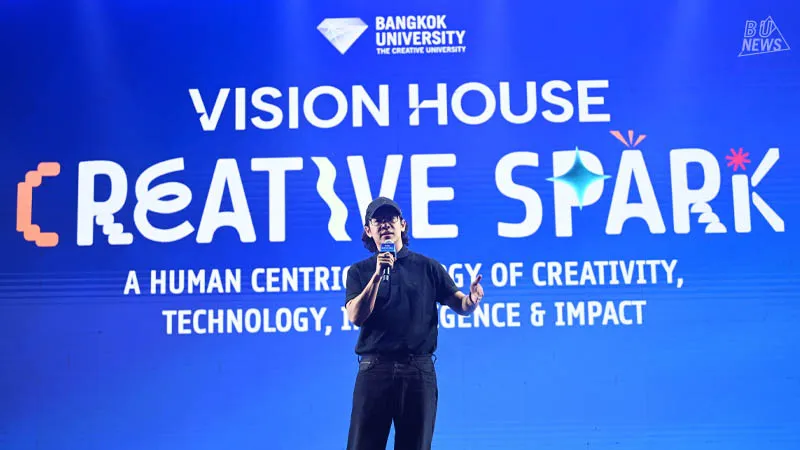
K.Panthapol Prasarnrajkit, CEO of Kreung Kao Co., Ltd., shared how creativity flourishes through building systems that truly understand creative professionals. In artist management, he said an organization's role isn't to replace the artist but to build systems that let artists focus on what they do best, backed by legal, marketing, financial, communications, and management support for a stable, sustainable creative career. On AI, he noted the real issue isn't merely the existence of AI artists or AI-generated songs, but the impact on labor structures and the creative industry system — while listeners' emotional connection to art remains a human matter, since the songs people love are the ones that make them feel something. What's changing is the sheer volume of output and choice; the industry's challenge is creating good spaces where meaningful work gets discovered and creators can build sustainable careers.
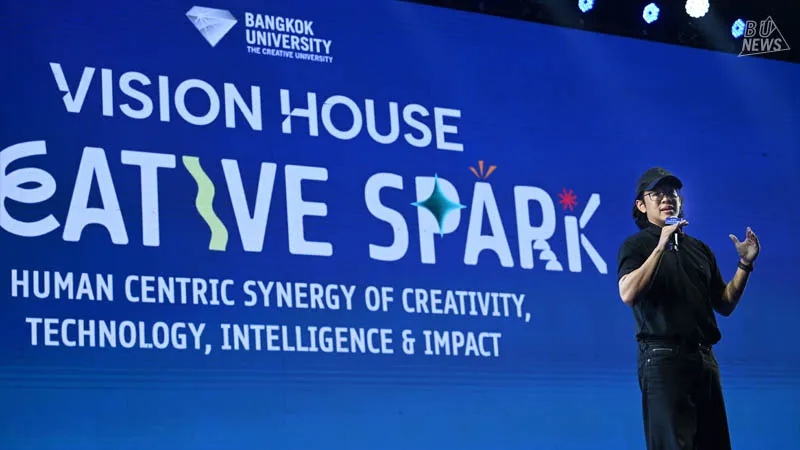
Keynote: "Beyond Viral to Superfan Impact"
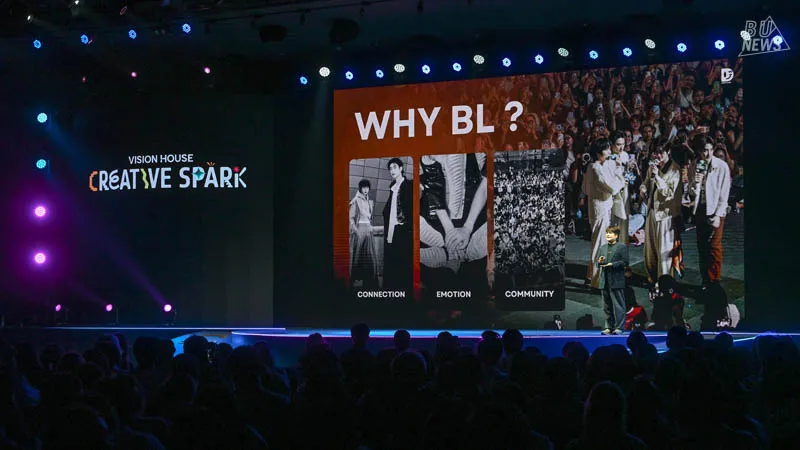
K.Kittipat Champa, founder, executive, director, and producer at Mandee Work Co., Ltd., urged the industry to look beyond viral trends toward building long-term relationships with audiences, fans, and communities. In an era when one clip can go viral overnight, he said the key question isn't just "how do we get seen" but "once seen, how do we keep them with us." Viral is only the starting point of visibility; the Superfan is the force that lets brands, artists, and content grow long-term. At Mandee Work, he said, producing a series isn't just about creating content for broadcast — it's about developing people, building artists into figures audiences love, bond with, and continue following even after a series ends.
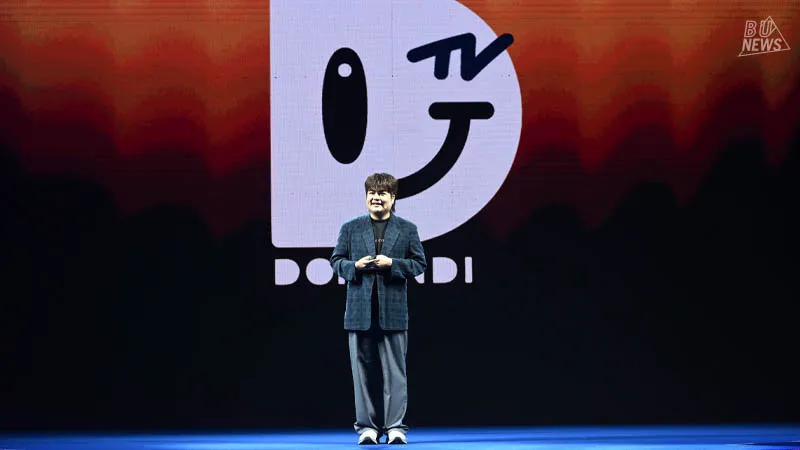
The afternoon keynotes converged on one point: the future of Human Creativity x AI isn't about using technology faster alone — it requires understanding humans, designing creative spaces that respect difference, building long-term relationships, and developing an ecosystem where creators, brands, artists, and audiences grow together sustainably.
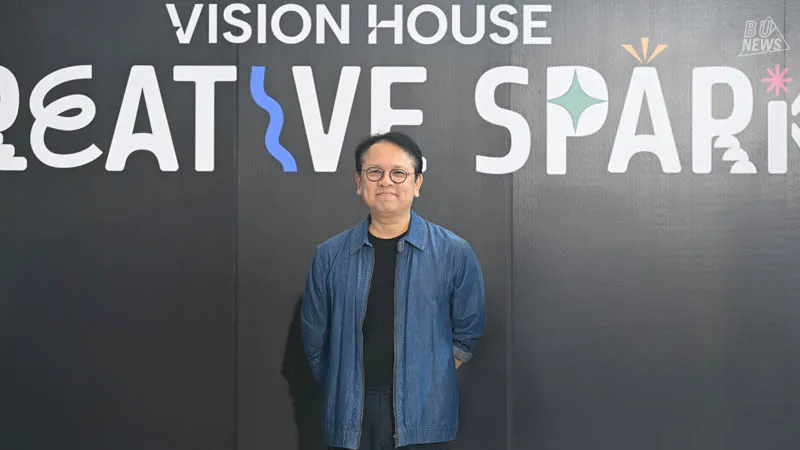
Asst. Prof.Dr.Arishai Akraudom, Dean, School of Communication Arts, Bangkok University, remarked: "VISION HOUSE: CREATIVE SPARK reflects that the future of creative communication in the AI era is not solely about technology, but about designing the relationship between technology and people. The industry needs a new generation who can not only use AI, but understand people, understand context, think critically, act ethically, and create genuine, meaningful value for society."
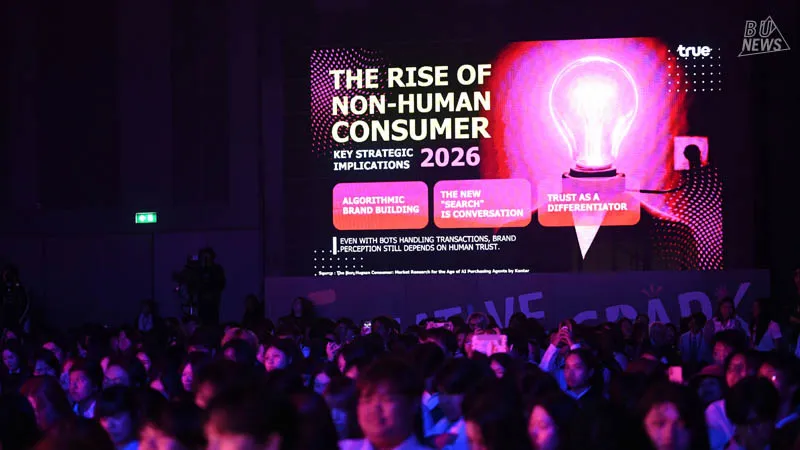
VISION HOUSE: CREATIVE SPARK marks another milestone for the School of Communication Arts, Bangkok University, in sparking dialogue, connecting people, and strengthening collaboration between academia and industry — jointly shaping the future of creative communication in the AI era and developing a new generation of leaders ready to create value for society.