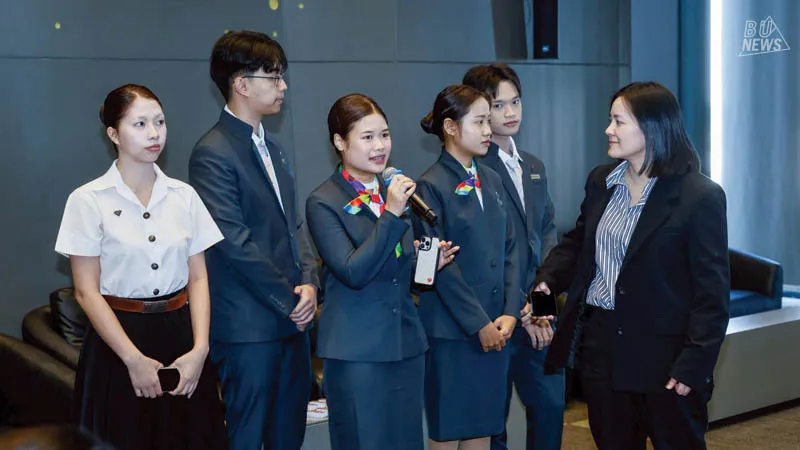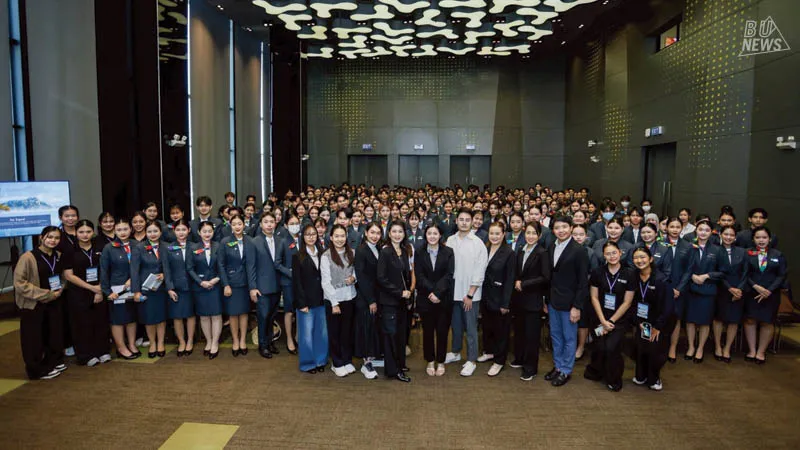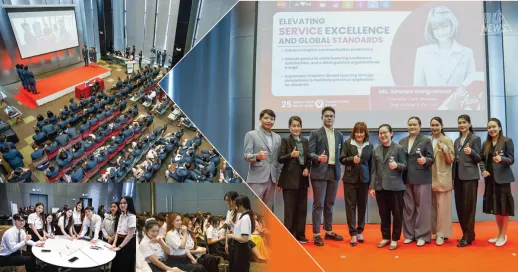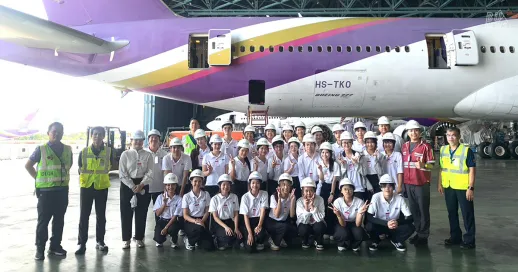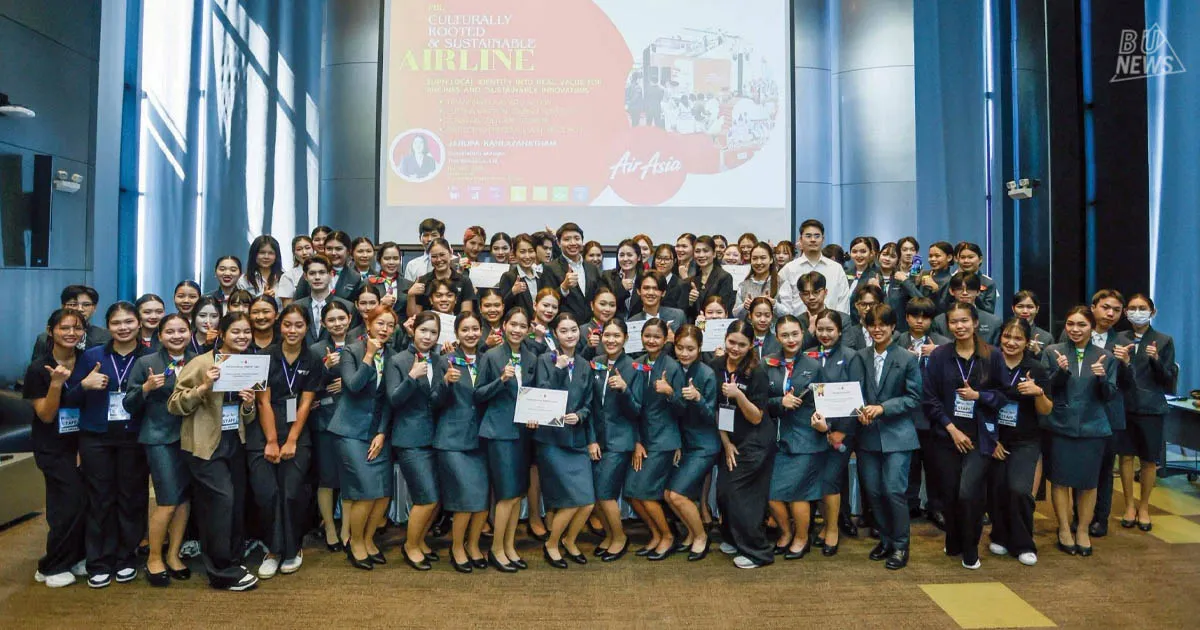
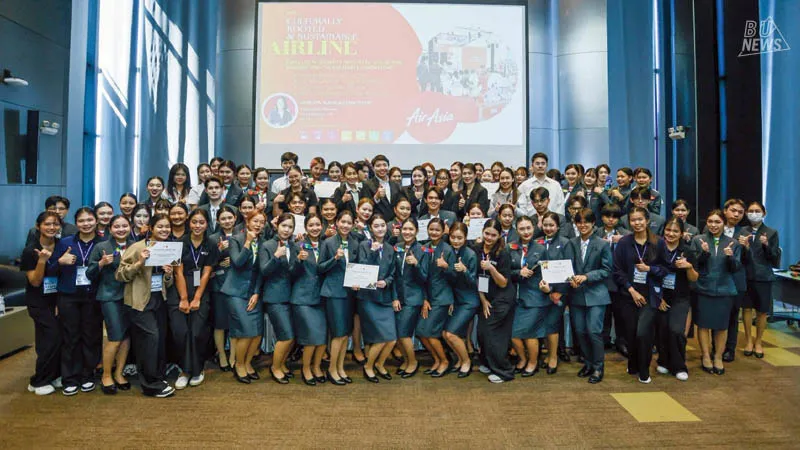
Airline Business Management Department, School of Humanities and Tourism Management, organized the activity "Towards a Culturally Rooted and Sustainable Airline Future: Thai AirAsia" as part of the course Trends and Issues in Hospitality and Aviation Industries (ABM 250). The event aimed to broaden students' perspectives on contemporary aviation business through issues of sustainability, community development, and sustainable tourism within the context of the modern aviation industry. Using a Problem-Based Learning (PBL) approach with real challenges from Thai AirAsia, students were guided to think critically, analyse, and design sustainable development pathways for aviation organisations — while also developing teamwork, communication, and creative media production skills.
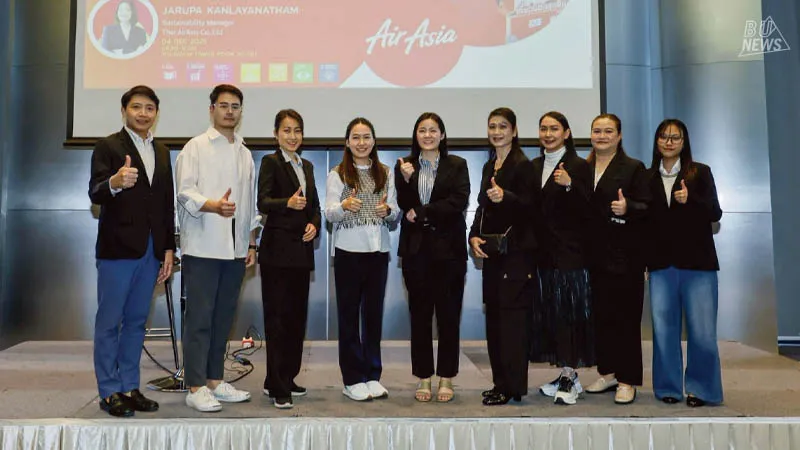
The activity was supported by Thai AirAsia Co., Ltd., with a guest lecture by Ms. Jarupha Kalyanatham, Sustainability Manager of the Sustainability Division, on the topic "An Airline for All Cultures and a Sustainable Future." Her session reflected the concept of developing an airline that connects cultural diversity with sustainability at both the organisational and societal level, and opened the floor for students to exchange ideas on sustainable airline business operations.

During the activity, students engaged with real-world challenges drawn from "AirAsia's Carbon Reduction Project" and "Journey D: Sustainable Tourism." They analysed and designed concepts and actionable initiatives in two roles: as "Cultural Interpreters" — connecting the cultural values of different destinations to the airline's context — and as "Sustainable Innovators" — developing creative ideas for society and the environment, covering waste reduction at tourist sites, promotion of cultural tourism, resource conservation, and the creation of media to raise environmental awareness. Students then presented project development concepts linking airline strategy with sustainability, community, and environmental issues through strategic thinking, teamwork, and applied aviation business knowledge.
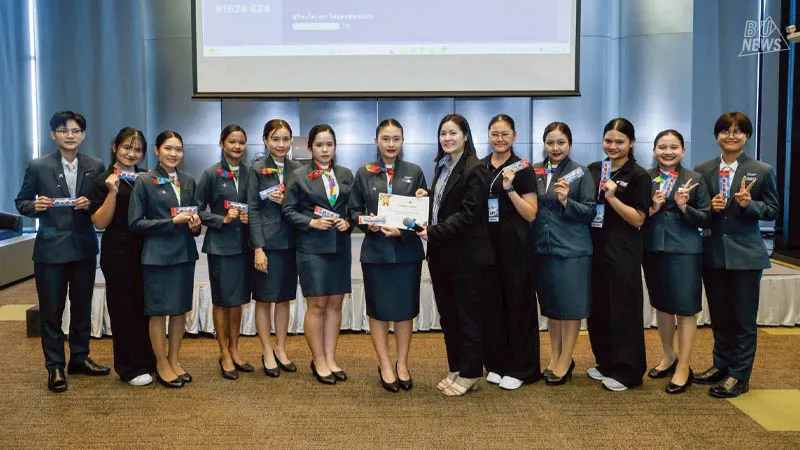
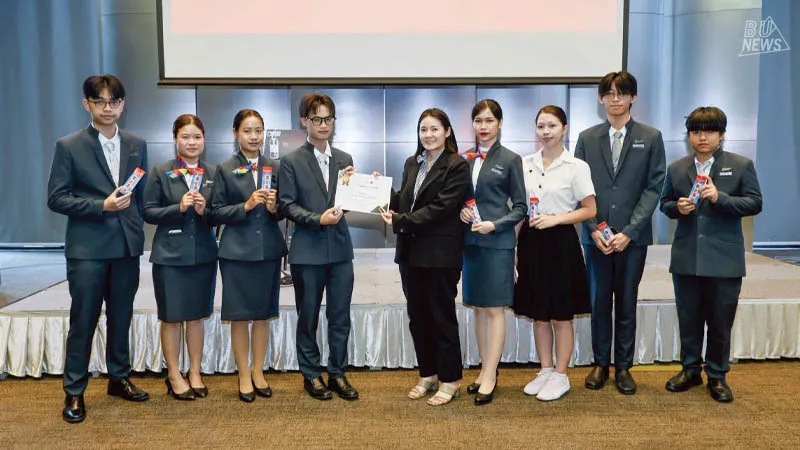
This activity reflected learning that bridges classroom knowledge with the real context of the aviation industry, giving students an understanding of the airline's role across dimensions of sustainability, culture, and social development — and preparing them to become next-generation aviation professionals capable of creating lasting value for both the industry and society.