


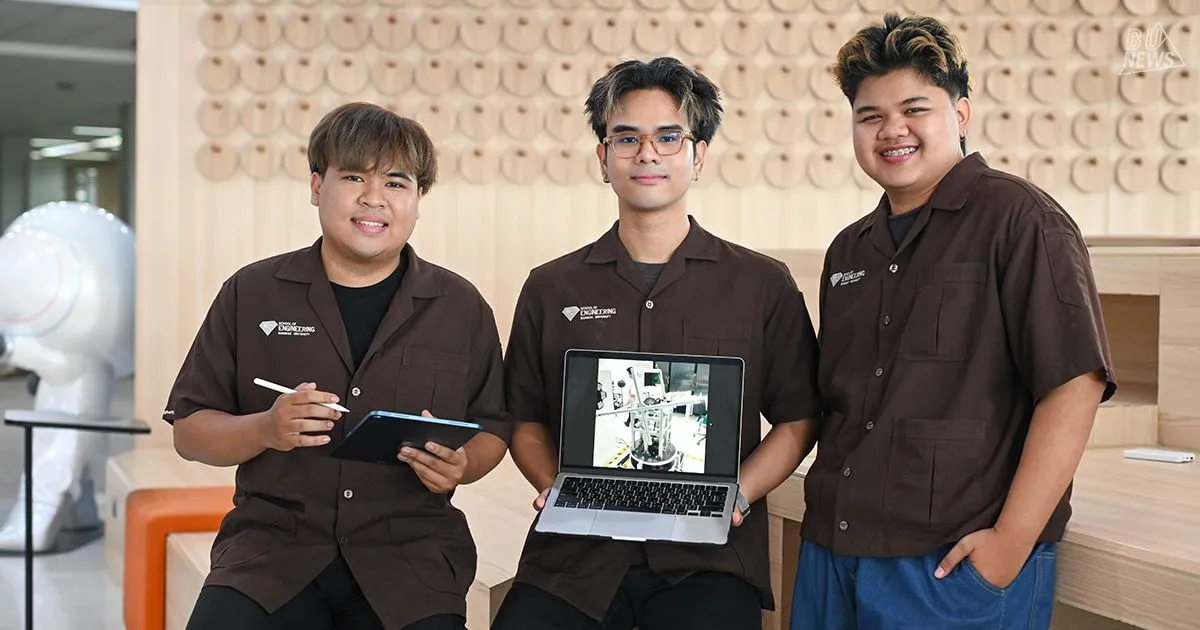
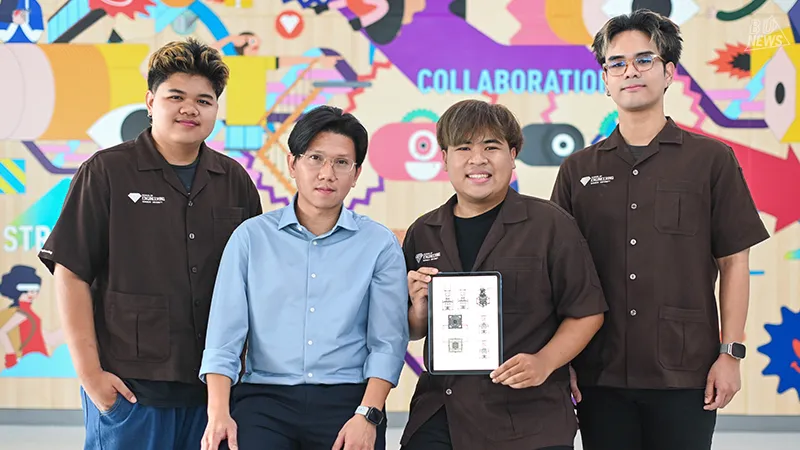
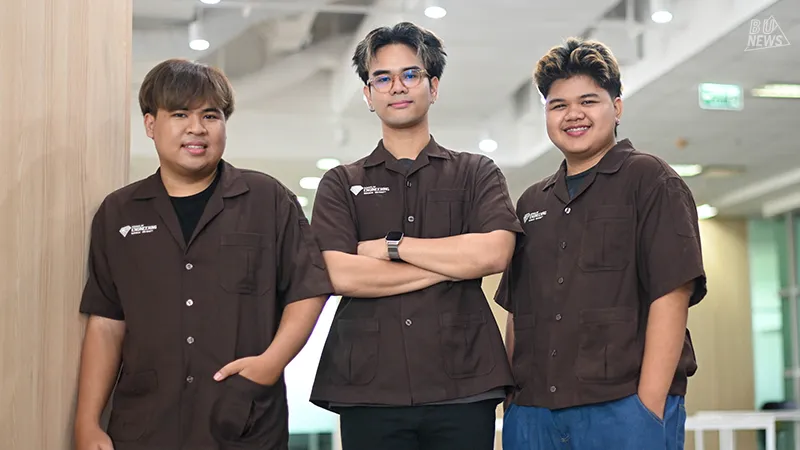
Mr. Nattanarong Thiangchit (Nai), students from Artificial Intelligence Engineering and Data Science program, Mr. Phanuphong Sangkhathin (Film) And Mr. Natthaphong Tali (Mac), students from Computer and Robotics Engineering program School of Engineering (BUEN) competing as Team BananaCat, reached the final 16 teams out of 49 applicant teams nationwide in the TPA PLC Competition 2026 robot contest, in the Robo Punching (boxing robot) game. The contest was organized by the Technology Promotion Association (Thailand-Japan), or TPA, together with leading private-sector and industry partners including Mitsubishi Electric Factory Automation. The students built a boxing robot that punches at targets according to signal lights, using a PLC to control the robot’s axes (the original text says “motor”) so it can hit targets automatically. It involves not only programming, but also mechanism design, problem-solving, and systematic teamwork. This story goes behind the scenes with the 3 students and their experience on the PLC Competition 2026 stage, which challenged students’ technology skills.
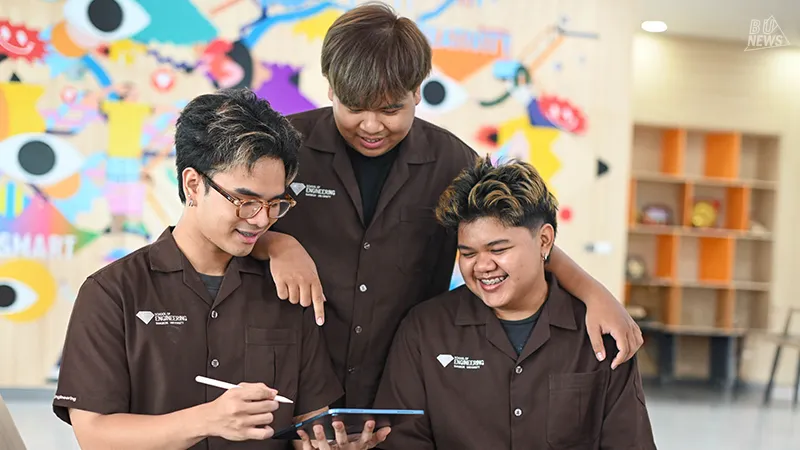
When Shared Interests Lead to a Team Built for Innovation
“The three students, Nai, Mac, and Film, share an interest in hardware and technology. They got to know each other and worked together through the “Learn Lab Power 2025” hackathon and the school’s Photo Booth project, before moving on to the PLC Competition 2026, which gave the team the chance to develop skills and build an automatic boxing robot. The idea to enter came from Nai, who had competed before and formed the team with Film and Mac. The three divided duties by strengths: Nai handled the team overview, planning, and the PLC system; Film looked after programming and building the simulation model; and Mac was responsible for hardware, including circuits, wiring, and assembling the robot’s structure.”
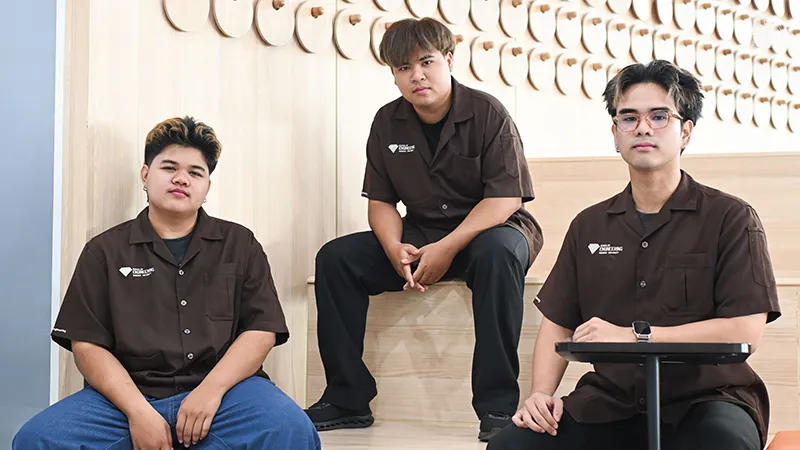
Overcoming Challenges with a Different Mechanism and Teamwork
“The contest brief required the robot to detect targets with signal lights and control motors to punch the target automatically. The team chose motor and mechanical systems instead of air pumps (pneumatics), which most teams used. Although this brought challenges in speed and accuracy, it let the team try a new approach and learn on-the-spot problem-solving and effective teamwork. Even though our team reached the final 16 and did not go on to compete further, we learned a great deal from this competition.”
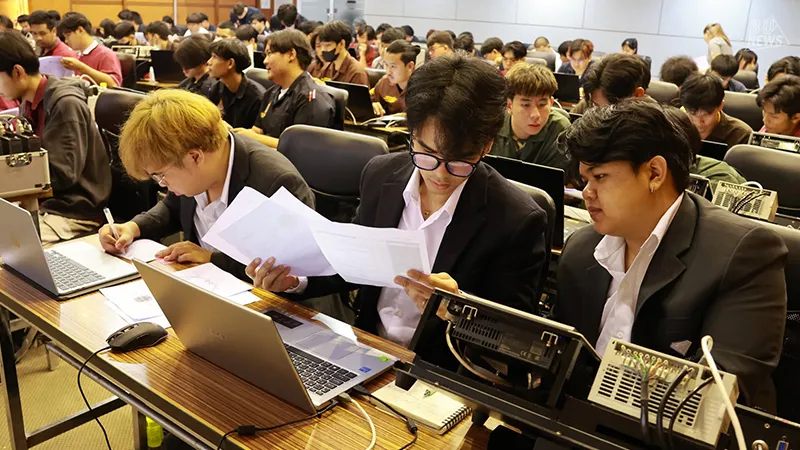
Advisors Strengthening Readiness
“Dr.Suparat Yeamkuan is advisor played an important role in giving guidance on programming, analyzing the contest brief, assessing feasibility, and solving technical problems, as well as helping decide on issues where team members had different opinions. This competition not only built experience and teamwork skills, but was also a chance to develop the work for next year’s competition and apply it to real work in industry.”


Information
Register Info
Contact Us