


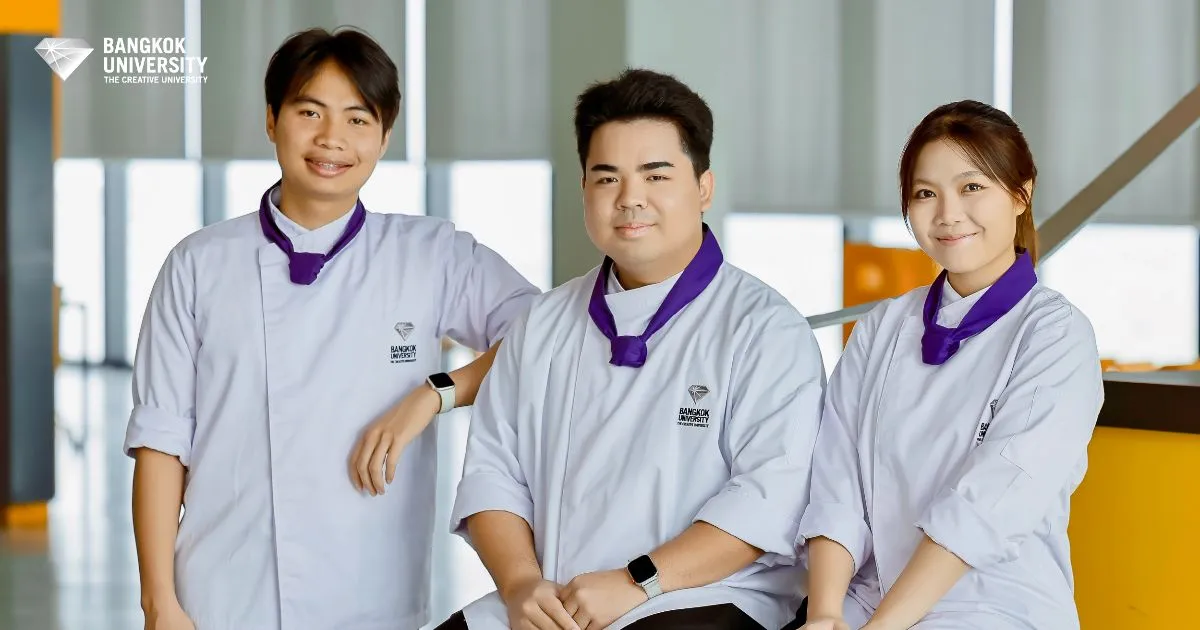
Congratulations to the Hotel Management students of the School of Humanities and Tourism Management, who competed in two cooking contests and impressed the judges, winning two awards:
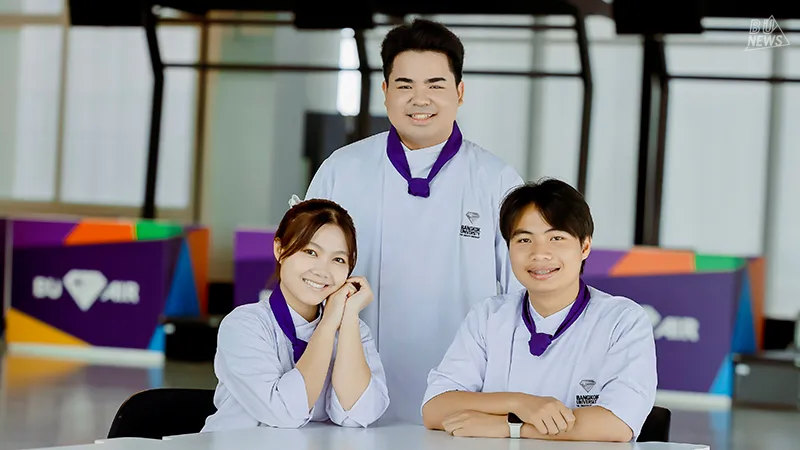
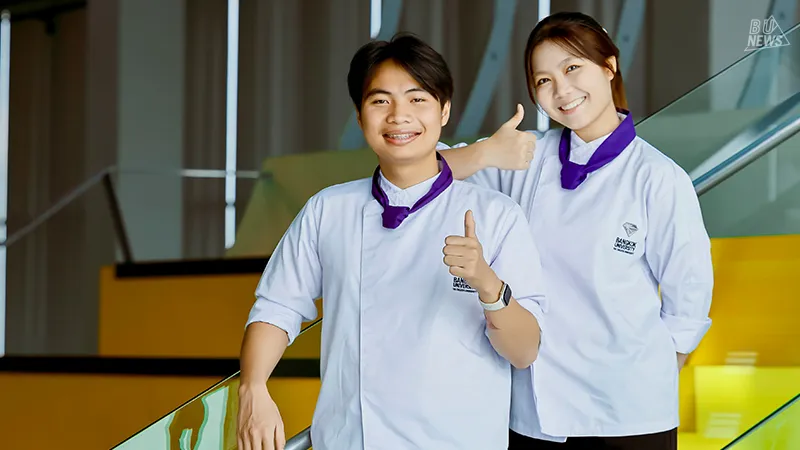
- Champion, Sudyod Chef Chonburi (Top Chef Chonburi) Season 2. Team members: Ohm Worasak Sampalee and Som-o Chotika Buapat
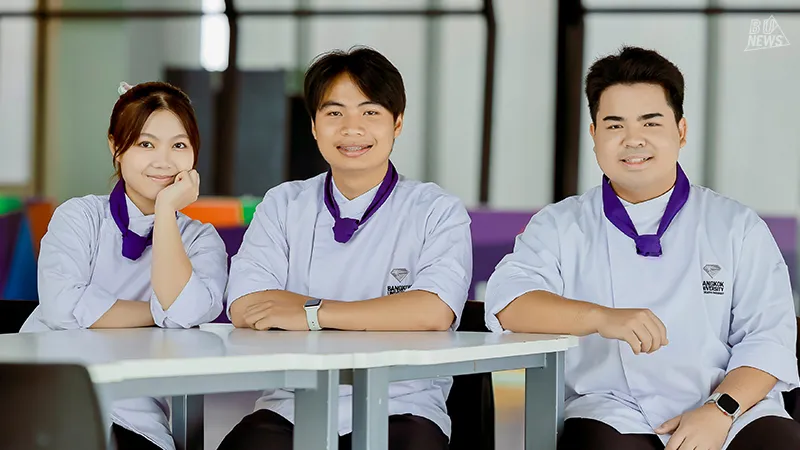
- 3rd Place, DITP x Iron Chef. Team members: Ohm Worasak Sampalee, Som-o Chotika Buapat and Phu Kittichet Dokmai
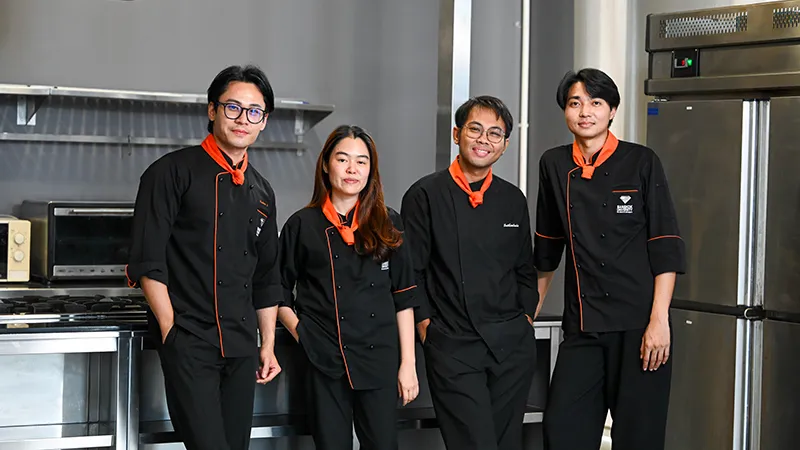
Instructor advisors: A.Suthee Sertsri, A.Paskrich Sutthiwetin, A.Porrada Luangon and A.Amondech Worana, Instructor, School of Humanities and Tourism Management
Sudyod Chef Chonburi Season 2: Bringing Chonburi’s Identity to the Plate
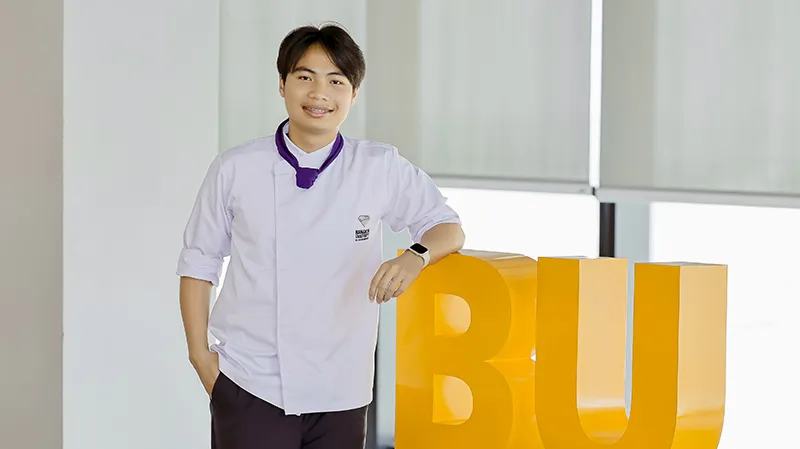
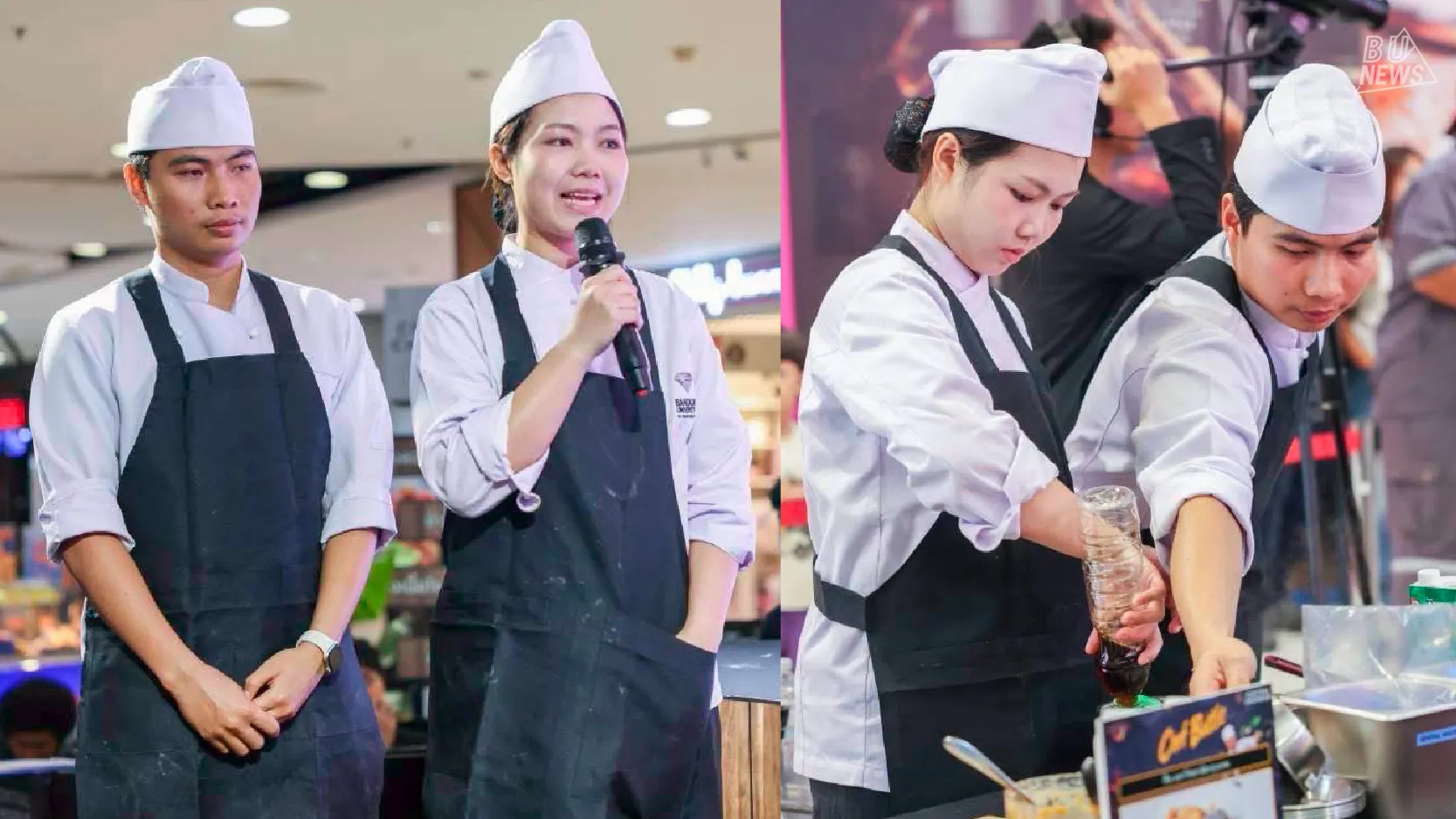
Ohm Worasak, the team representative, said he saw the call for entries on the show’s page and invited teammates who had competed together in the university’s “Krathá Dek Hor” contest to join again. Preparation time was short because the previous contest had just ended and the team had classes to attend, but they still found time to practice together consistently.
The challenge was to “elevate Chonburi’s local ingredients in line with the city’s identity.” The contest was open to professional chefs and students nationwide. More than 100 teams submitted entries, and the organizers selected 20 teams to compete from photos of their dishes.
“Our team submitted dishes under the concept ‘Chonburi’s Culinary Wisdom Heritage,’ created from Chonburi’s signature foods: crab kaeng khua, prathat lom, fried pla kang leung (yellowstripe scad), Si Racha pineapple and fern shoot yam, jaeng lon with sweet sugarcane, and black squid ink fried rice,” the representative said.
All 20 teams cooked simultaneously within 1 hour. The judges praised the BU team’s food as delicious and were impressed by their prathat lom, a Chonburi specialty that is normally bite-sized. The team reworked it into a large candy shape filled with crab kaeng khua, which carried them into the final 5.
Final 5: The “Beautiful Sea” Dish and the Secret Ingredient, Lump Crab Meat
In this round, the secret ingredient was lump crab meat. The team created a dish called “Beautiful Sea” (Talay Ngam), consisting of Si Racha pineapple fried rice with crab, golden purse (thung thong) dumplings filled with crab and plum, crab tempura served with sauce, stir-fried fern shoots with lump crab, and coconut water soup with shrimp balls.
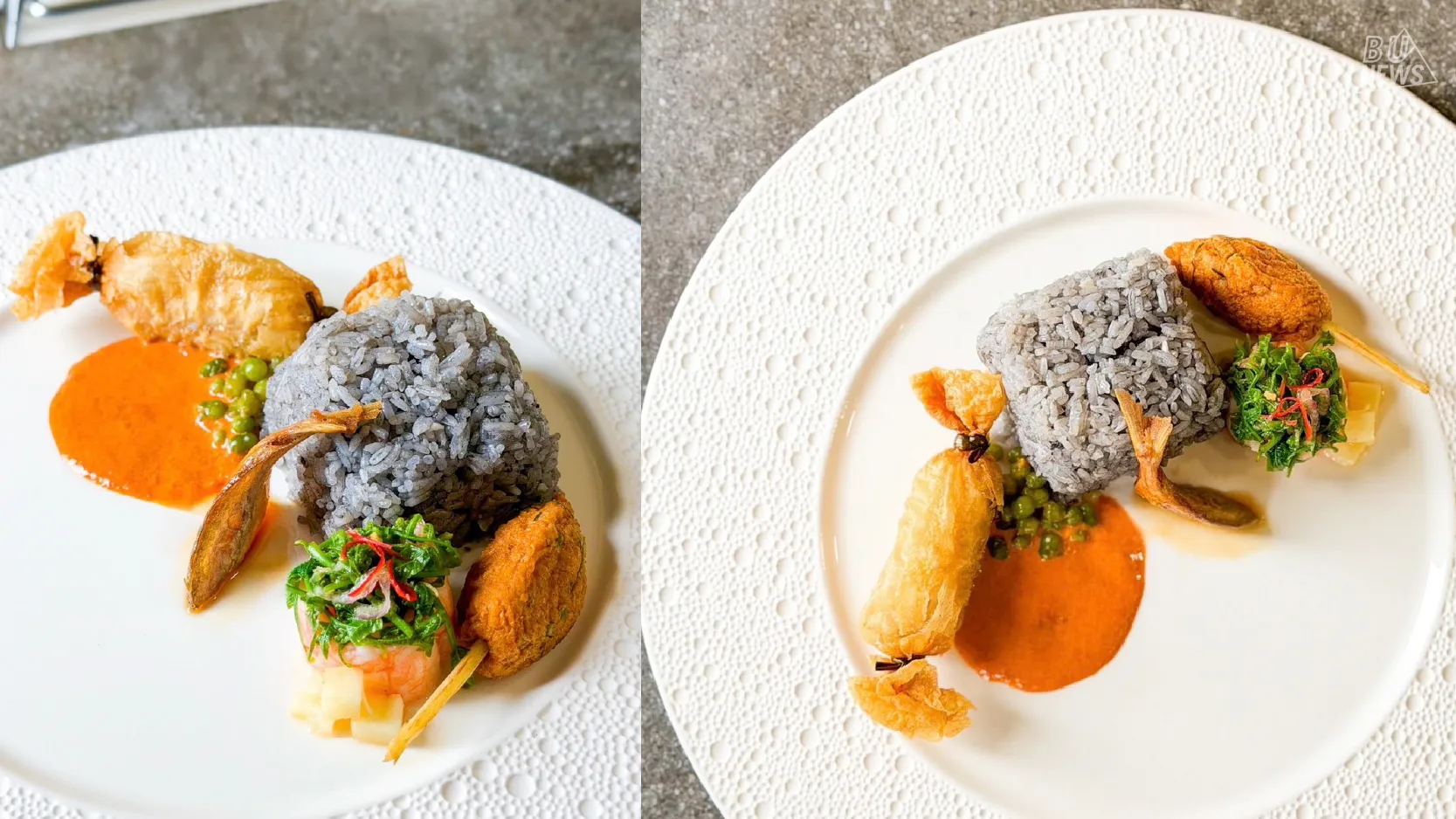
Although they had to create the menu on the spot without knowing the ingredient in advance, the team had worked out the dish’s framework with their advisors before the competition, covering complementary flavors and plating. “Originally, we planned to serve the pineapple fried rice in a bamboo tube (khao lam), which is part of Chonburi’s identity, but we couldn’t do it as planned, so we used a pineapple instead,” the representative said of solving the problem on site.
DITP x Iron Chef: Elevating “Banana in Sweet Coconut Milk” with Thai Ingredients
Before the Sudyod Chef Chonburi stage, the team had just competed in DITP x Iron Chef, organized by the Ministry of Commerce to promote the use of Thai ingredients in creating desserts. It was open only to university students, one team per institution, with more than 20 teams nationwide.
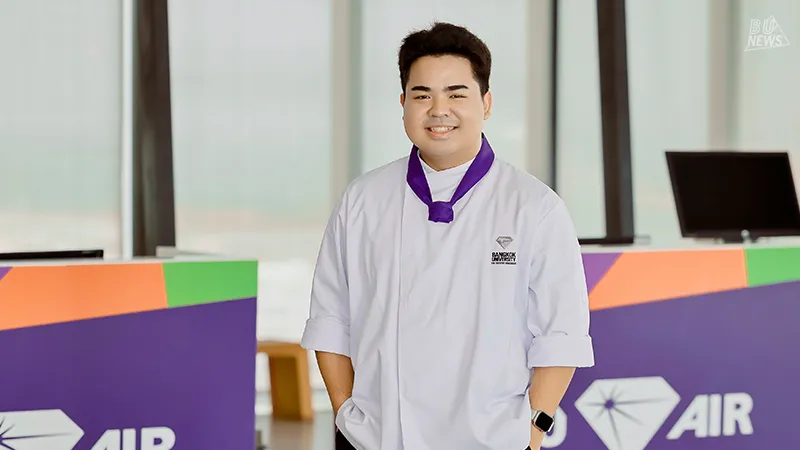
The team representative, who is more skilled in savory dishes and had won awards before, wanted to challenge himself with desserts, so he invited two juniors with backgrounds in desserts and bakery to join. “We knew the challenge only 2 weeks in advance and had to practice at night after class because members’ schedules didn’t match. Our lecturers opened the university kitchen for us to practice together.”
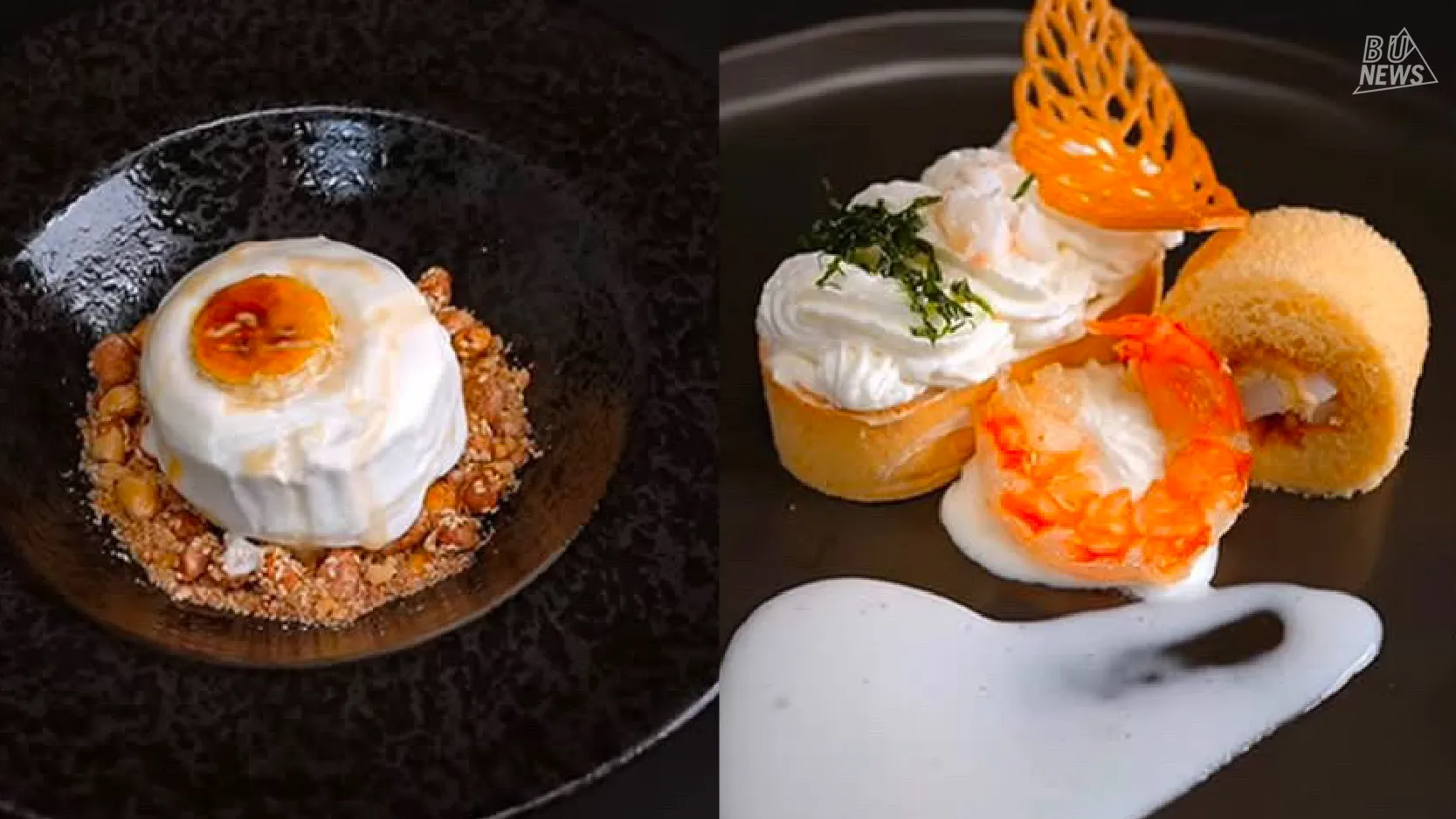
The challenge was to elevate kluay buat chi (bananas in sweet coconut milk). The team tried several approaches, including grilled banana ice cream, battered fried finger bananas, and banana chips, before settling on “Banana in Coconut Milk Mousse.” The center is caramelized banana, made by sautéing Thai kluay hom bananas in caramel, surrounded by a banana-coconut milk mousse and served with brittle-glazed crunchy nuts. The dish scored in the top 5 and advanced to the second round.
Second Round: Coconut Challenge with the Secret Ingredient, Fresh Shrimp
The theme for this round was coconut, with fresh shrimp as the secret ingredient. The team created 2 dishes within 1 hour: a dessert-style miang kham, using lime zest jam for sourness and a sweet-salty coconut-sautéed shrimp filling, paired with coconut cake topped with sweet shrimp sauce. The judges tasted and announced results the same day, and the BU student team took 3rd place.
What They Learned
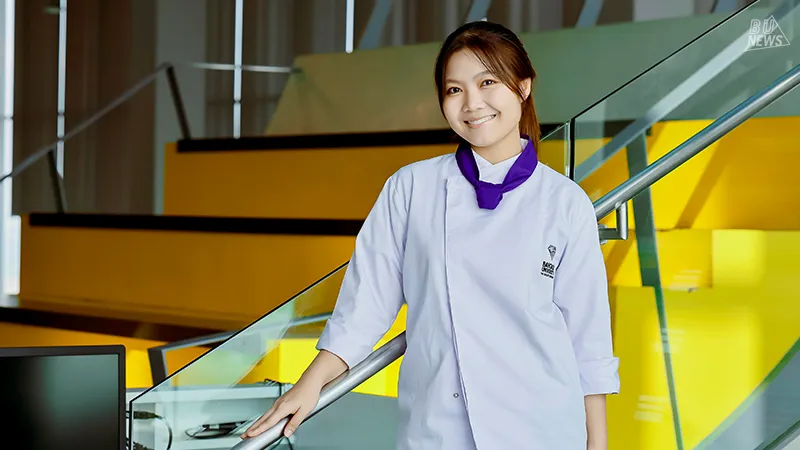
The team representative said: “We gained a new perspective on presenting food to diners, developed cooking skills such as making ice cream, and saw the importance of teamwork, which brought us closer. We also learned both sweet and savory cooking, practiced solving problems on site under pressure, and learned from our teammates’ diverse ways of thinking.” The team also feels desserts need not be fixed in form; savory ingredients and flavors can be adapted into sweets.
Voices of the Advisors Behind the Success
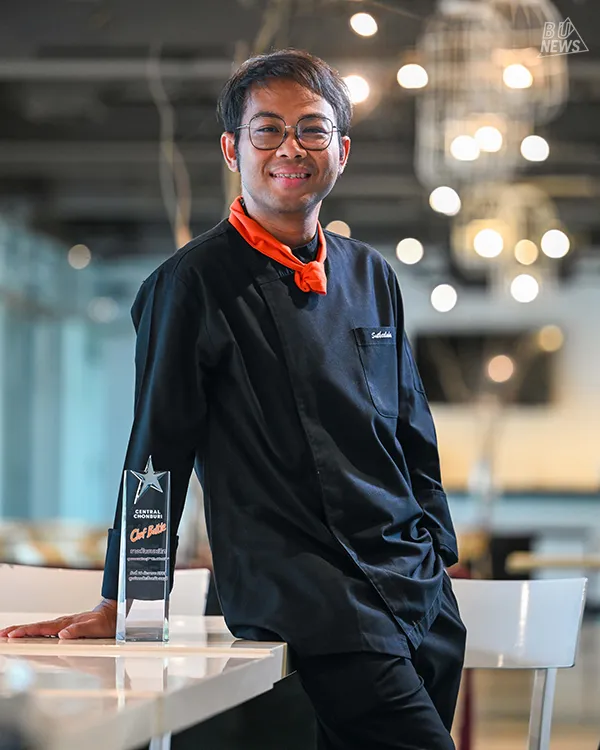
A.Suthee Sertsri described his coaching role: “I was born in Chonburi. My role was to help the students develop menu concepts and choose ingredients, while the actual cooking was the students’ job. Our first-round entries included prathat lom, crab kaeng khua from Luk Sam Sip (a newly selected ‘Lost Taste’ dish of Chonburi), and fern shoot yam with Mosaic Shrimp. Another dish was jaeng lon from Nong Mon Market, which brought together the best of Chonburi on one plate: coconut milk rice, black squid ink stir-fry, and a sauce we created ourselves, Served with fried yellowstripe scad (pla kang leuang tod), this dish becomes a complete meal with every element covered. That’s how we reached the final 5.”
He added: “The final required creating a menu on the spot with lump crab meat, so we produced Si Racha pineapple baked rice, stir-fried fern shoots, fish cakes (tod mun), young coconut soup made with coconut water, and crab golden purses, five components like the first round. The most important thing that won the students the award was telling a story through the food. Everyone had studied Thai cuisine, so they had both cooking and management foundations. Together with seniors who had competed before and knew how to prepare and finish on time, they were well equipped.”
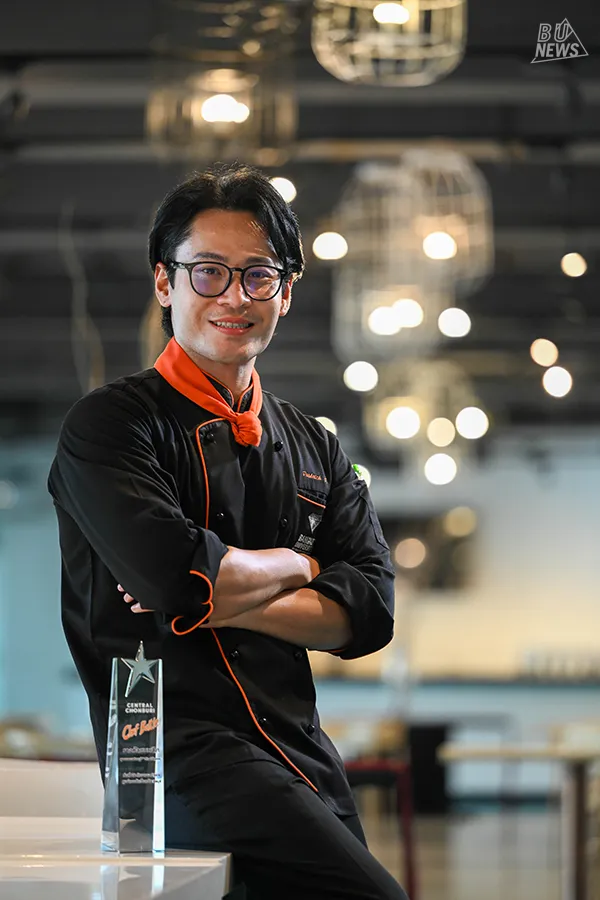
A.Paskrich Sutthiwetin said: “After the students received the challenge and developed their own menus, they would try cooking first and then bring it to us. We would check how feasible the dish was and whether the flavors worked together, and recommend techniques and methods. If they were unsure or got stuck during cooking, they could ask, and we would find solutions together. Everyone has foundational Thai cooking skills, including frying, yam, curries, stir-frying, and cutting, which are key techniques of Thai cuisine. In the competition, they built on classroom knowledge and added more value to their dishes.”
He added: “In coaching, we had the students practice with a timer as in the real competition. Our job was to watch from the side without interfering, to see which steps were good and which needed adjustment. After they finished, we gave feedback and tasted the actual food. This let us control every process closely, stay true to the challenge, and highlight the main ingredient fully. I’m very proud of the students and believe this success will carry them far in the future. Being the force behind them truly fulfills me as a teacher.”
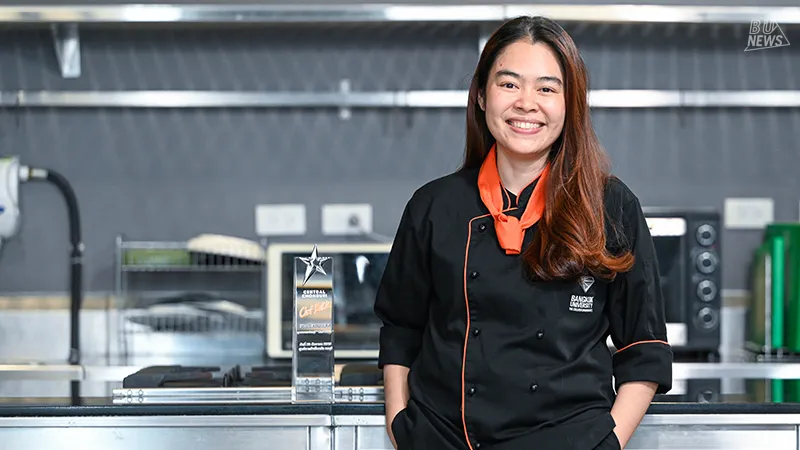
A.Porrada Luangon said: “The students’ results exceeded expectations, especially given how little practice time they had. I saw them practicing constantly and with great dedication. I advised on menus, such as which flavors a dish should be paired with, plating, and how well each ingredient in the dish goes together. In class, I teach students to apply knowledge in practice, for example, sponge cake can be adapted into a banana-in-coconut-milk dessert, so that classroom knowledge can be used as much as possible in real practice.”
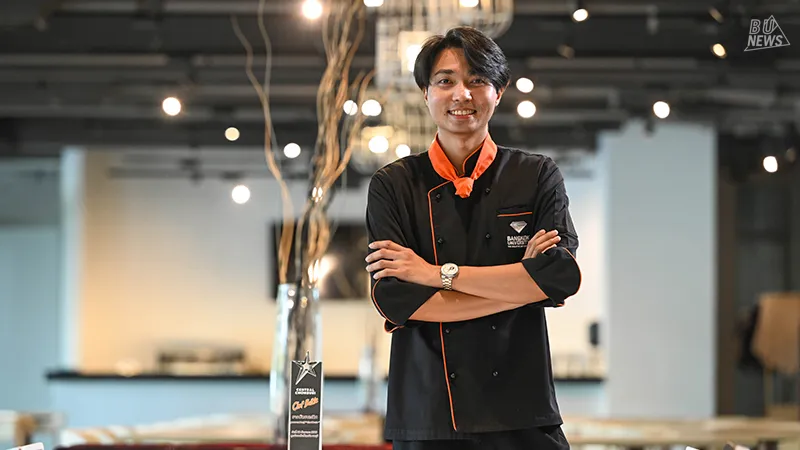
A.Amondech Worana said: “I advised the students on operations, meaning on-site readiness: equipment, ingredients, and getting themselves fully prepared before the competition. Every course already includes preparing oneself and ingredients before actual cooking, so I brought that knowledge to teach the students to be as ready as possible.”

Information
Register Info
Contact Us