
Driven by an interest in cybersecurity and hands-on experience in technology, one student has stepped into the role of GrandPals. Congratulations to Gyoza Chanunya Sutti, a 100% Phet Nai Chaiyaphruek scholarship student in the Artificial Intelligence Engineering and Data Science program, School of Engineering, who has been selected as one of 8 representatives from Thailand to serve as a GrandPal — using social media to raise awareness of digital safety and encourage people to learn how to recognize, prevent, and respond to online scams through the game "Be Scam Ready," under the Scam Ready ASEAN project. The initiative is run by the ASEAN Foundation, supported by Google.org, and implemented in Thailand by the Kenan Foundation Asia.

From Experience to the GrandPals Role
"My main motivation started with my experience as a Google Student Ambassador Thailand, Cohort 1, which showed me I still had so much more potential to develop and new things to learn. When I came across GrandPals — a large-scale, ASEAN-wide program — I saw an opportunity to gain new experience and push myself further. Combined with my current internship experience in cybersecurity, I felt joining this program would help turn my interest into real, hands-on experience, and let me use my knowledge to benefit others."
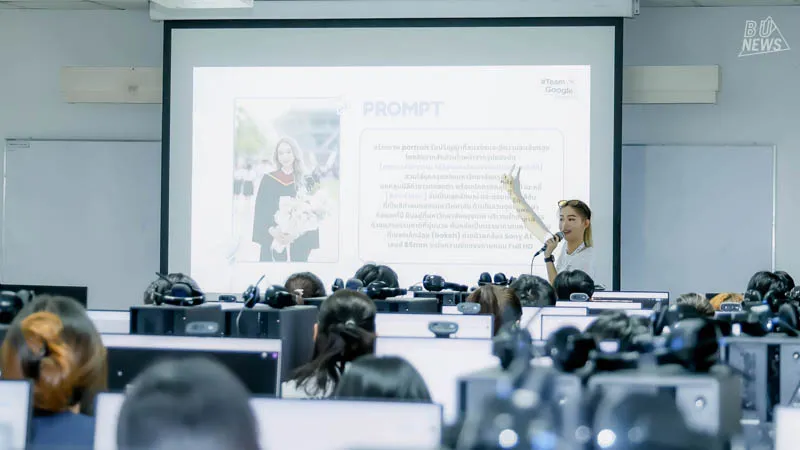
Online Media and Raising Awareness in the Age of AI
"My four years at BU showed me the power of social media to create a 'new wave' and spark momentum around issues that might otherwise be overlooked. Especially now, as AI plays a growing role in daily life and people of all ages are using online media more than ever, building AI literacy — along with teaching people to spot and guard against online threats — has become essential, so that people of every age can use technology with awareness and safety."

"Be Scam Ready": Transforming Online Safety Education Through Gameplay
"The 'Be Scam Ready' game is a tool that shifts how people learn about online threats — from memorization or reading manuals to learning through interactive simulated scenarios. Players take on a role and make decisions in situations modeled on real platforms and everyday life, allowing them to learn scammers' tactics in a safe environment without risking real money or data. Each decision lets players immediately see the consequences of being scammed, creating concrete, tangible awareness. It also helps participants recognize the psychological tactics scammers use — such as instilling fear, urgency, or FOMO, or asking for small pieces of information before working toward more sensitive data — making players more alert to verifying sources, more willing to ask questions, and better able to decline suspicious contact."
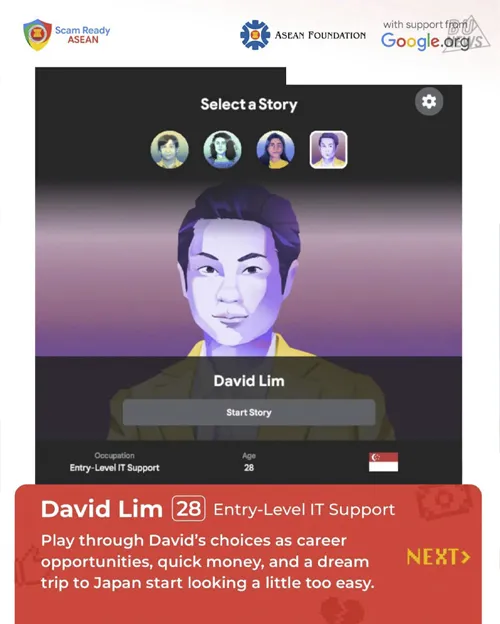
Building "Digital Immunity" and Passing Knowledge on to Society
"One of the biggest lessons from this program was realizing that teaching technology isn't just about relaying technical information — it has to start with understanding the learner, especially older adults or those with limited digital skills. That means using accessible language, letting people learn by doing, and using tools like gamification — bringing in game elements and mechanics — to create an experience that's fun rather than stressful. At the same time, I came to understand that scammers don't just target computer systems; they exploit human psychological vulnerabilities — fear, greed, and urgency. So prevention has to go beyond security software; it has to build 'Digital Immunity' into the way people think. Going forward, I plan to build on my experience as a GrandPal by organizing small-scale activities within networks both inside and outside the university, as well as inviting family and community members to learn through the 'Be Scam Ready' game — so everyone can practice handling scams in a safe space before facing the real thing, and together, we can spread knowledge to build a more aware and safer digital society."
Play Now Be Scam Ready





Information
Register Info
Contact Us