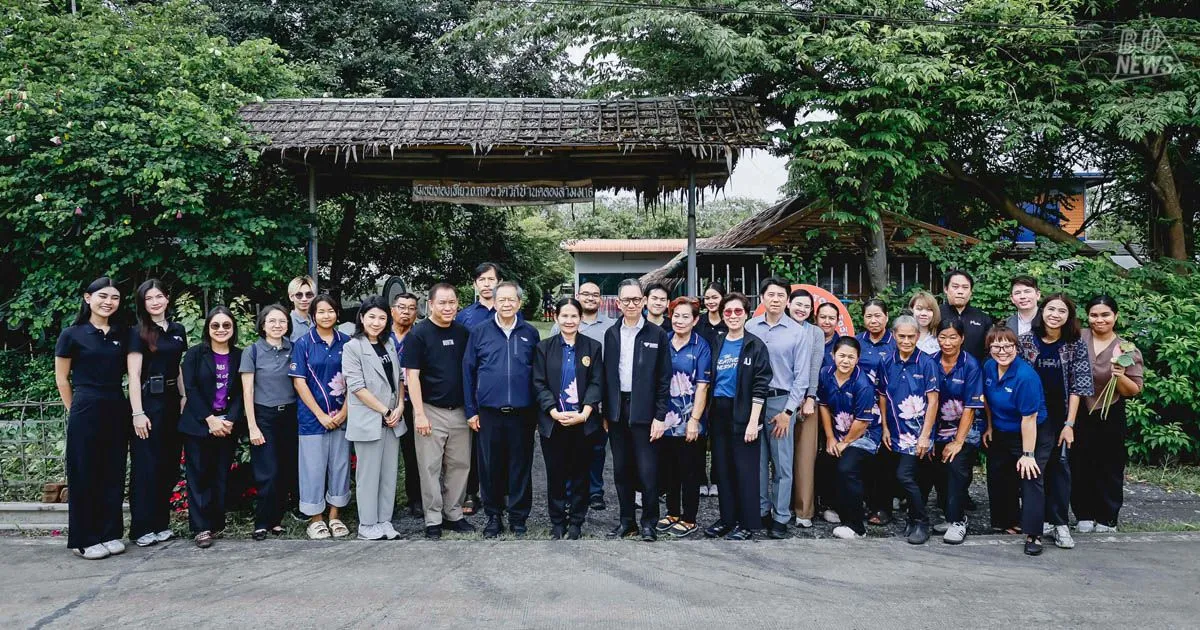
Bangkok University, together with Thai Beverage Public Company Limited (ThaiBev) and the Ban Khlong Sam OTOP Nawatwithi Sufficiency Economy Community in Khlong Luang District, Pathum Thani Province, has continued an academic service project for two consecutive years — one where the community owns the problem and co-designs its own development. The project brings knowledge from multiple disciplines directly into the field to solve real issues, ranging from designing tourism routes, local food sets, landscaping and interpretive signage, to developing a "Smart Banana Drying House," which became a new product generating income for the community. The project is now being prepared as a model for academic service that can be expanded to other communities. Bangkok University executives and faculty members from the participating schools visited the site to review project outcomes at the Ban Khlong Sam OTOP Nawatwithi Sufficiency Economy Community, joined by representatives from ThaiBev and the EISA project, as well as community leaders and representatives, to discuss the direction for future collaboration.
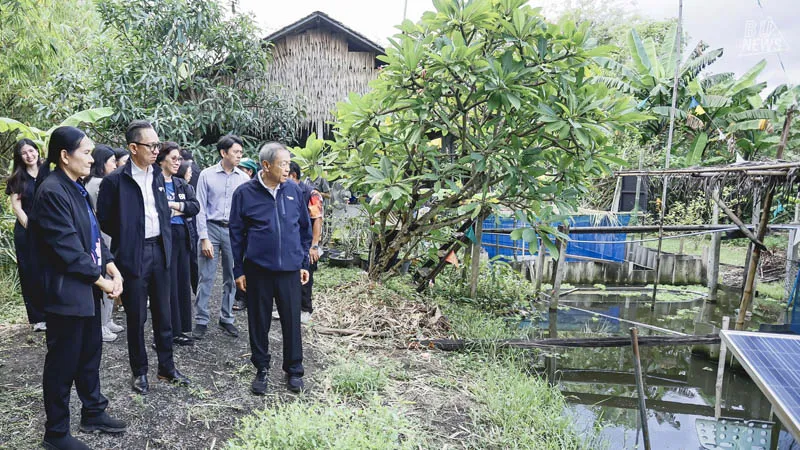
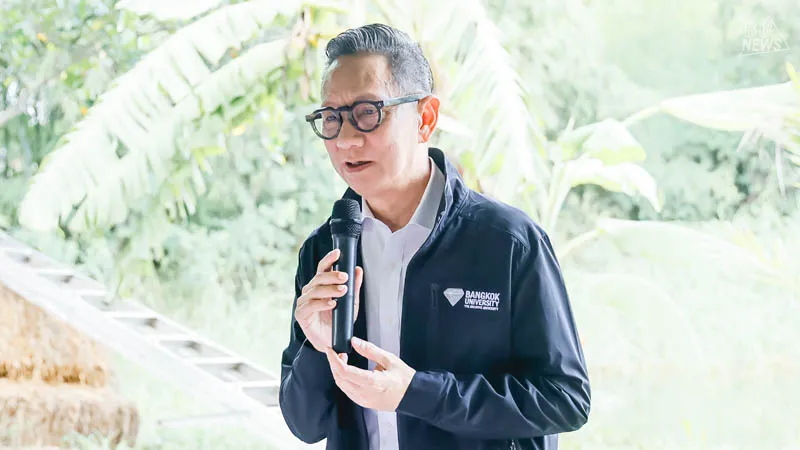
Asst. Prof.Sansern Milindasuta, Executive Vice President for Academic Affairs at Bangkok University, said that the collaboration between the university, ThaiBev, and the community generates real development power by combining knowledge and experience — starting from helping identify the areas and issues most in need of development, which he called highly valuable to the project. He noted that the results of this partnership extend beyond strengthening and sustaining the Khlong Sam community alone, but also serve as a learning ground for students who can carry the experience of working on real problems forward and apply it to developing other areas in the future.
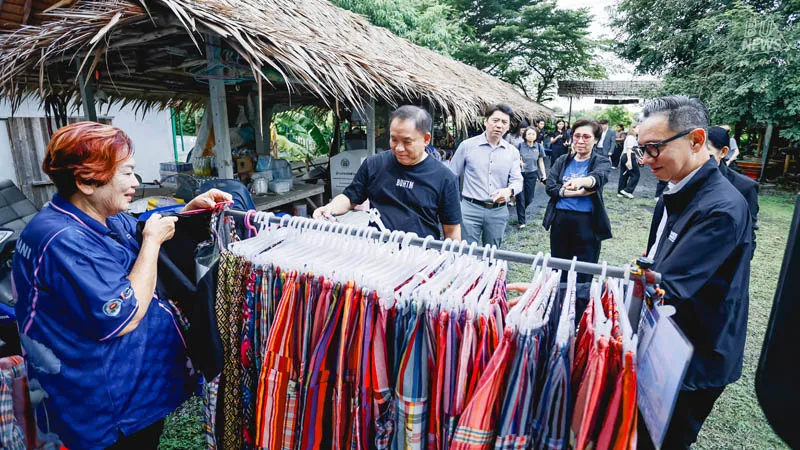
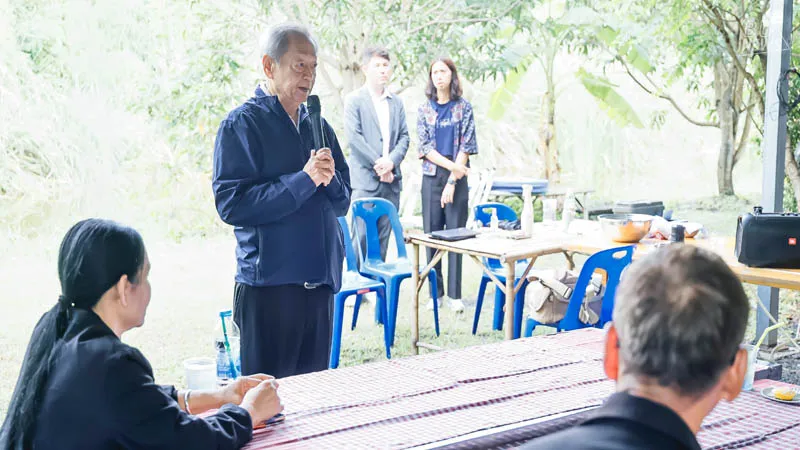
Mr. Adisak Thepart, Chairman of the Disaster Relief and Volunteer Project at ThaiBev, said that the Khlong Sam community has preserved agricultural practices that put the Sufficiency Economy Philosophy into genuine practice, making it well-suited to become a model for raising community-based tourism standards and stimulating household economies. He added that Bangkok University helped strengthen the community's skills in products, souvenirs, and tourist readiness, with the goal of making Khlong Sam a model owned by local residents and capable of sustainable development on its own.
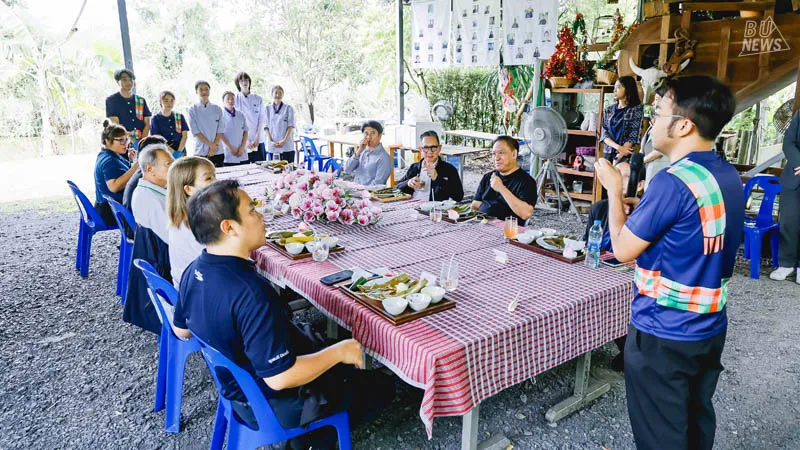
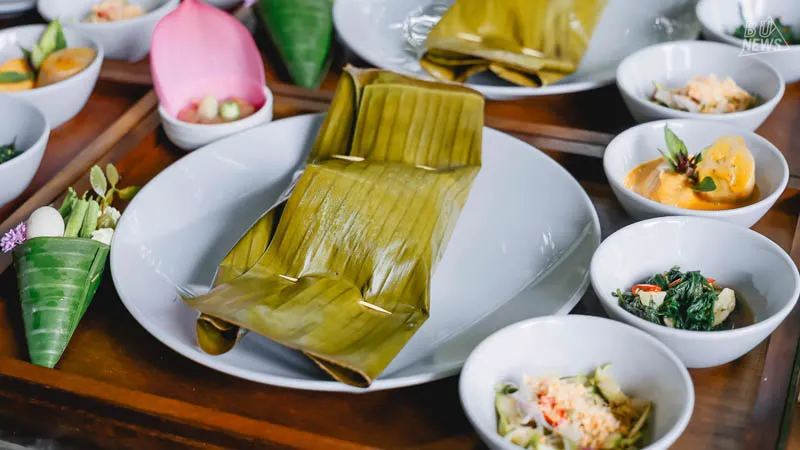
Bangkok University integrated knowledge from 9 schools with real-world, hands-on learning, producing outcomes and approaches the community can put into direct use. One key result was the development of the "One Day Trip Green Route," led by the Department of Tourism Management, The School of Humanities and Tourism Management, together with students who surveyed the area and designed the route based on what the community already had — organic farming practices, ancient fig trees, red azolla ponds, and lotus ponds — while also developing digital media to communicate the community's story to younger generations. The team also helped develop "Sarab Khlong Sam," a local set-meal concept presenting local ingredients and flavors in a contemporary style to create new value for the community's food and produce. The School of Architecture designed the landscaping, wayfinding, and interpretive signage system to create a travel experience connected to the area's story. Meanwhile, the School of Engineering, together with the School of Information Technology and Innovation, upgraded the community's existing solar-powered drying house by installing a smart IoT control system, improving the consistency and quality of the drying process. This led to the creation of a "dried banana" product from local produce, which received such strong demand that supply couldn't keep up with orders, helping increase the value of the community's agricultural output. At the same time, the School of Accounting, the School of Business Administration, the School of Entrepreneurship and Business Management, and the School of Law provided business support — covering income–expense systems, cost calculation, branding, marketing channels, and guidance on trademarks and packaging information. The School of Digital Media and Cinematic Arts also created a 3D drone-mapped survey covering approximately 14,000 square meters, serving as a digital database for future area development planning.
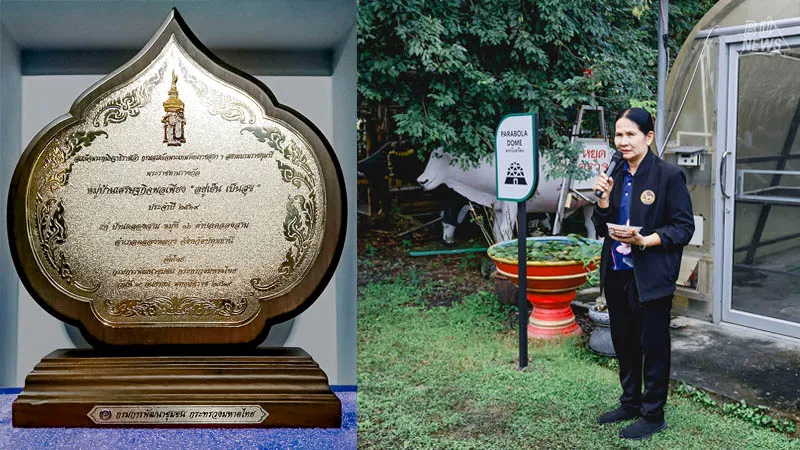
The results of this collaboration are also reflected in two major awards the community received in 2026, which recognize its strengthened capacity and resilience. Ms. Rungnapa Kaewtham ("Kamnan Nok"), a community leader, shared that Khlong Sam residents have followed the Sufficiency Economy Philosophy and practiced integrated farming across generations, but that their achievements had long been difficult to measure concretely and were not widely known. After partnering with Bangkok University and ThaiBev, the results became clear enough to be presented as a model to government agencies, leading to the community receiving two awards this year: the Royally Bestowed Sufficiency Economy Village Award, presented by Her Royal Highness Princess Maha Chakri Sirindhorn, and the Golden Tweezers Award, given on Village and Sub-district Headman Day 2026. She described these awards as an important source of encouragement for residents and confirmation that what the community has built together with the university and ThaiBev is a strong model that can continue to be developed in the future.
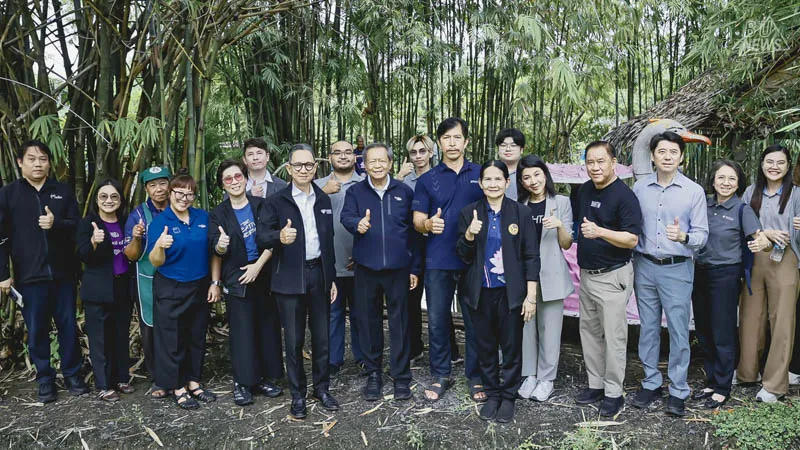
This development continues moving forward with a shared roadmap to raise community-based tourism standards, diversify products, food, beverages, and souvenirs, and build capacity to accommodate tourists and visitors coming to learn about local agricultural practices. Integrating teaching and learning with community development — and advancing the Sustainable Development Goals (SDGs) — reflects how a "community's challenge" can be transformed into a space for learning, innovation, and results capable of continued, sustainable growth.

Information
Register Info
Contact Us